

MBTI for Hong Kong Parents: Understanding a Child Unlike You
There is a particular exhaustion that comes from parenting a child who is nothing like you. The quiet parent with the child who narrates every thought aloud. The organised parent with the child who has never once found their own shoe. In a tired moment it is easy to read that difference as a problem to be corrected — and most Hong Kong parents are tired, because the schedule alone would flatten anyone.
Personality type will not make homework faster. What it does is separate two things we usually confuse: behaviour that needs correcting, and wiring that needs accommodating. Start by finding your own type with our FREE 16 Personalities - Tadaland MBTI Test! The friction usually starts there.
Start with yourself, not the child
The most useful thing a parent can know is which of their own preferences they are unconsciously treating as the correct way to be a person. An extraverted parent hears a quiet child and worries. An organised parent sees a messy room and reads disrespect. Neither reaction is about the child. Both are about a parent meeting an unfamiliar setting and assuming it is a fault.
Once you can name it — this bothers me because I am strongly J, not because she is doing something wrong — you have a choice you did not have before. Sometimes the answer is still "tidy your room". But you make that call deliberately rather than reflexively, and children can tell the difference.
What you might be seeing, and what tends to help
| Type | Tadamate | What you may see | What helps |
|---|---|---|---|
| ISTJ | Beanie | Wants to know the plan and the rule | Warn them before anything changes |
| ISFJ | Mozzarella | Quietly looks after everyone | Ask what they need; they will not volunteer it |
| INFJ | Roro | Feels the room before they can explain it | Time alone after school, not more talking |
| INTJ | Jimi | Asks why, constantly | Answer honestly; “because I said so” costs you trust |
| ISTP | Nico | Learns with their hands | Let them take it apart |
| ISFP | Mellow | Feels deeply, says little | Praise privately; never compare them to a sibling |
| INFP | Apollo | Lives partly inside their own head | Take the imaginary world seriously |
| INTP | Cappu-Cappu | Goes deep on one strange topic | Follow the obsession; it is how they learn |
| ESTP | Hoola | Needs to move in order to think | Physical outlet before homework, not after |
| ESFP | Taro | Comes alive with an audience | Let them perform; do not read it as showing off |
| ENFP | Jolly | Starts ten things at once | Help them finish two; do not shame the other eight |
| ENTP | Pierre | Argues with everything | It is thinking out loud, not defiance |
| ESTJ | Cres | Wants fairness and clear rules | Explain the rule; they will then enforce it on you |
| ESFJ | Pixi | Reads your mood before you speak | Reassure them that adult problems are not their fault |
| ENFJ | Micah | Takes responsibility for others young | Let them be the child sometimes |
| ENTJ | Dante | Wants to be in charge | Give real, age-appropriate authority over something |
Three Hong Kong pressure points
The child who needs to decompress after school
A long commute, a full day of instruction, then tutorial. For an introverted child that is eight or nine hours of continuous input with no recovery. The resistance you meet at six in the evening is often not laziness or defiance — it is a child who has not had a moment alone since seven in the morning. Twenty minutes of nothing, before homework, frequently buys back an hour of cooperation.
The comparison trap
Every family has the cousin with the grades. For Feeling-preference children especially, comparison does not motivate. It lands as a verdict on their worth, and they withdraw from the task entirely. The same information delivered as "here is what would help you specifically" produces effort where "look at your cousin" produces shutdown.
Space, and the lack of it
In a small flat an introverted child may have literally nowhere to be alone, and an extraverted child may have no one to be loud with. Both are real needs going unmet by architecture rather than by parenting. Headphones, a library, a walk, a corner that is theirs for one hour — small structural fixes usually outperform another conversation about attitude.
What personality type cannot do
It cannot tell you your child's future career. It cannot explain a sudden change in mood, sleep, appetite or school performance — those need a doctor or the school counsellor, not a framework. And it must never be used to lower what you expect of a child. "He's a P, so he can't be organised" is not a personality insight; it is a skill that has not been taught yet.
Type is a lens for understanding, not a label for limiting. The moment it becomes an excuse for either of you, put it down.
Talking about it with your child
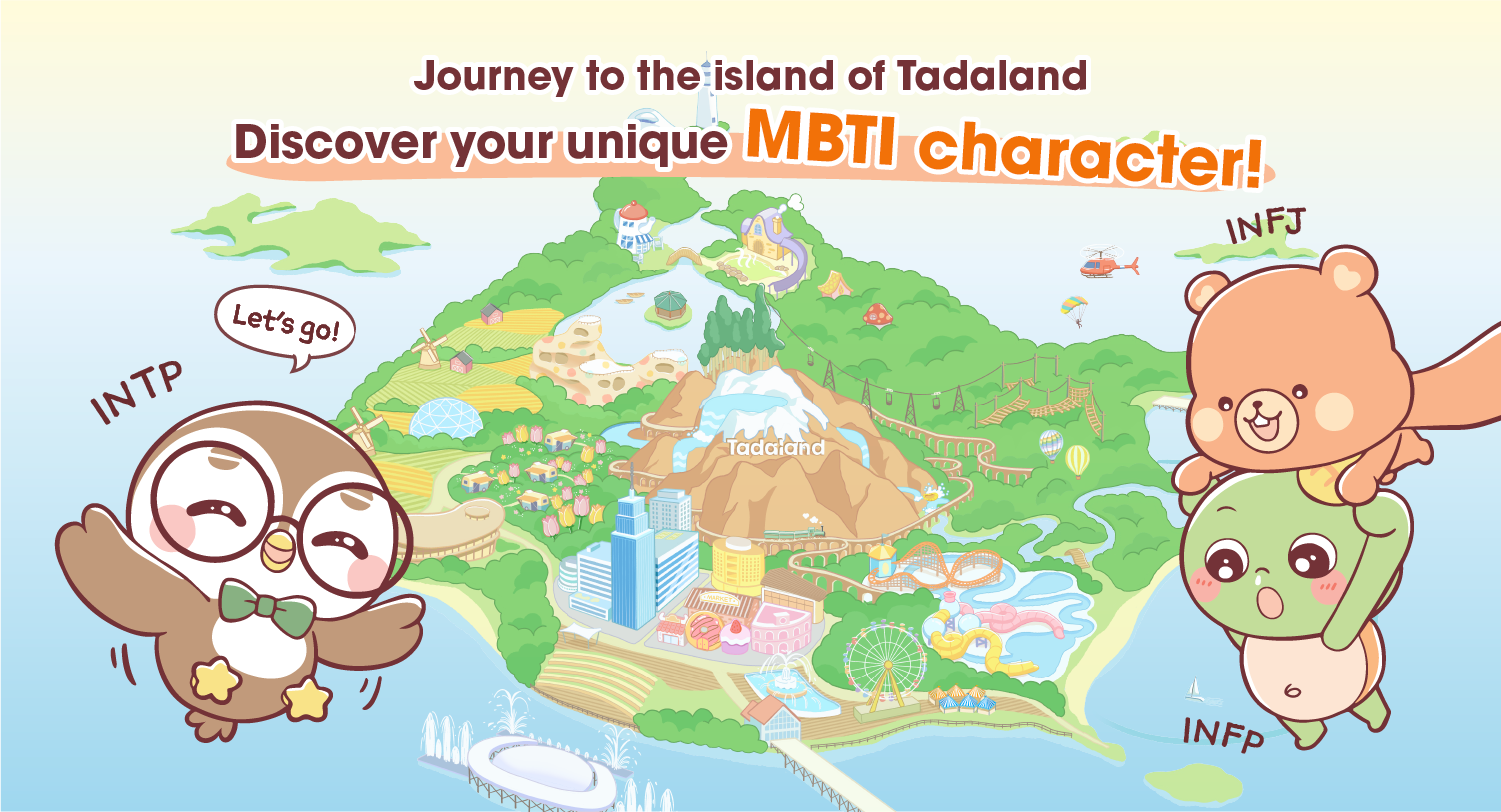
Children respond badly to being categorised and well to being recognised. That is why we built the 16 Tadamates as characters rather than codes: it is far easier for a seven-year-old to say "I'm like Apollo, I need quiet time" than to explain introversion. Meet the 16 Tadamates together and let them pick who they recognise. You will learn something.
Tadaland also runs personality workshops for Hong Kong schools and family groups, and has published a Hong Kong MBTI picture book made for exactly these conversations. If that would be useful for your school or organisation, get in touch.
An honest note on children and personality tests
MBTI-style instruments were designed for adults and are not validated for children, whose preferences are still forming and can shift substantially through adolescence. Nothing here is a diagnosis or an assessment. Use it as a way to talk with your child about difference, and treat any result as a conversation starter rather than a conclusion. If you are worried about your child's development, wellbeing or behaviour, speak to your paediatrician or your school's counsellor.