

MBTI, Listening or Advice: Ask Before You Help
Two cups arrive at a café table, and one friend begins describing a difficult afternoon. Before the story reaches its end, the other has found three possible solutions. The advice may be sensible. It may also be answering a question nobody has asked yet. Through an MBTI lens, the useful question is not whether Thinking types fix and Feeling types listen, but how either person can find out what kind of help is wanted now.
Curious about your own preferences? Explore the FREE 16 Personalities - Tadaland MBTI Test! as a character-based starting point for reflection, not the official MBTI assessment or a measure of listening skill.
The suggestion arrived before the question
Consider a fictional Friday evening in Mong Kok. Yan tells Alex that a shared presentation was changed shortly before a meeting. She had prepared the earlier version and did not know which slides would appear. Alex opens a notebook and suggests a shared folder, a naming rule and a cut-off time for edits.
Those ideas might be useful later. Right now, Yan has not finished explaining what happened. The difficult part was being asked about a change she had never seen. She wants Alex to understand that moment before they start designing next week's filing system.
Alex is not trying to dismiss her. He hears a repeated problem and reaches for something that could prevent it. Yan hears the speed of the answer and wonders whether the story was worth telling. Neither intention settles the mismatch. A good intention still needs a way to check where it has landed.
Alex puts down the pen. He asks whether she would like him to listen for a while or work through possibilities with her. She chooses listening first. The notebook remains on the table; it has simply stopped chairing the conversation.
T and F describe decision criteria, not two jobs
The Myers & Briggs Foundation describes Thinking and Feeling as different starting points for making decisions. Thinking gives more weight to impersonal principles and logical analysis; Feeling gives more weight to values and the people involved. The Foundation explicitly separates these meanings from intellect and emotion. Everyone can use both.
That distinction matters at this table. Someone considering consistent procedures may offer a rule because they want the next meeting to be fairer. Someone considering the effect on a colleague may want an explanation before deciding whether that rule is enough. Both are considering something real. Neither preference tells us whether the person wants advice tonight.
A person who identifies with Thinking can want company without solutions. A person who identifies with Feeling can ask for a direct comparison of two options. Listening is not the Feeling person's unpaid role, and practical reasoning is not reserved for Thinking. Type offers questions to explore, not an allocation of duties.
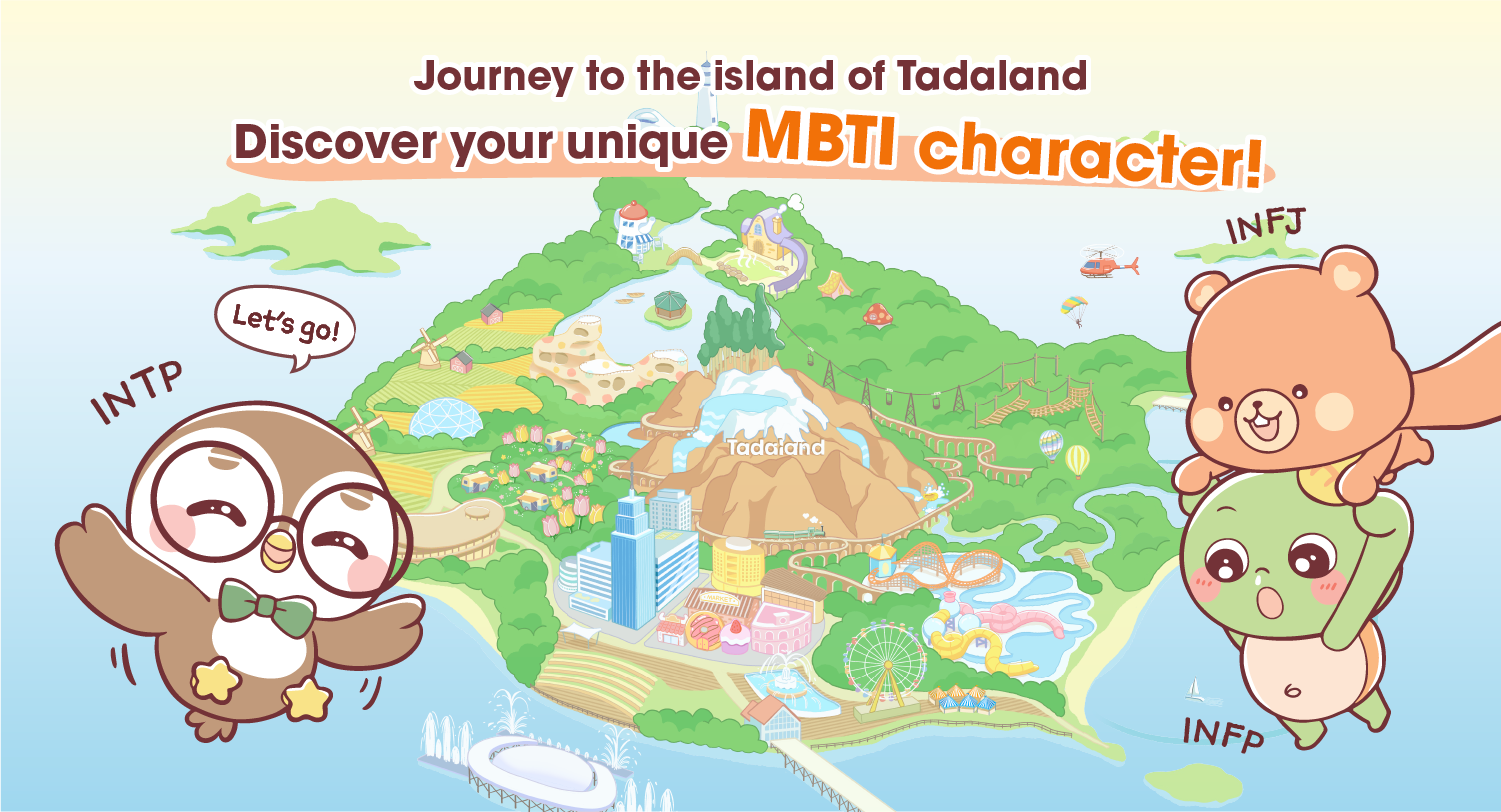
For a character-based route into those differences, Tadaland pairs INTP with Cappu-Cappu and INFP with Apollo. These are fictional companions for exploring the framework, not evidence that people sharing three letters need the same response.
Ask about the next few minutes
A choice between listening and advice is useful only if it sounds like an invitation rather than another form to complete. Ask about the immediate conversation: would a listening ear help, or would they like to look at options together? If both sound wrong, leave room for a third answer. They might want a distraction, practical help with one small task, or to go home.
When the answer is unclear, make the next step small. Offer to listen until the person has finished, then check again. Do not turn uncertainty into permission to launch the entire plan. Equally, someone who asks for help comparing two actions need not complete a long emotional preamble before receiving it.
Listening can include a brief check of your understanding. Alex might ask whether being caught unprepared in front of the group was the hardest part. Yan can correct him. That is different from announcing what she must really feel, and different again from deciding which colleague was at fault after hearing only one account.
The examples here are suggested conversational experiments, not a tested intervention or a script guaranteed to work. Their point is to replace a guess with an answer the other person can change.
When advice is invited, leave the choice attached
Later in the fictional conversation, Yan asks what she could request before the next meeting. Alex checks the scope: one useful request, or a wider rethink of the presentation process? She wants one request. Together they settle on asking whoever makes a late change to send the revised slide and a short explanation before the meeting begins.
The shared folder may still be a good idea, but it is outside tonight's agreed task. Advice becomes easier to use when it fits the decision actually in front of the person. Ask what they have already tried, which constraints matter and who has authority to agree to a change. Otherwise a tidy suggestion can quietly create work they cannot carry out.
Offer an option as an option. Explain its likely trade-off without pretending to know the outcome. Yan can choose a different approach, ask someone else, or decide she needs more information. Receiving advice does not create a debt to follow it.
The same applies to the listener's limits. If Alex has only fifteen minutes before leaving, saying so is kinder than promising an evening and becoming impatient halfway through. A clear limit describes available help; it need not judge the importance of the story.
Keep the question open after the first answer
A preference for listening at the start is not a permanent ban on suggestions. A request for advice is not consent to keep advising after the person asks to stop. Check again when the conversation changes rather than treating the first answer as a contract for the whole friendship.
Try noticing your own first move next time. Do you reach for an explanation, a practical fix, a reassurance or another question? That habit can tell you something worth reflecting on. It cannot, by itself, identify your full type or establish what another person needs. The Foundation's ethical guidance describes preferences as tendencies, not absolutes.
At the café table, Alex's notebook is still open. Yan has finished the story and chosen one request to consider. The useful change was not that one friend became less practical or the other became less affected. They found out what the conversation was for. There is room beside the cups for an answer that neither had brought in.
Find your Tadamate
Every type in this article has its own Tadamate. Pick yours and take it home.
 INFP · Apollo
Apollo enamel pin
$48.00
Shop now →
 INFP · Apollo
Apollo pen with charms
$19.00
Shop now →
 INTP · Cappu-Cappu
Cappu-Cappu enamel pin
$48.00
Shop now →
 INTP · Cappu-Cappu
Cappu-Cappu pen with charms
$19.00
Shop now →
Not sure of your type?Take the free test