

How to Work With All 16 MBTI Types: A Hong Kong Office Guide
You do not choose your colleagues. You choose how you work with them. In a Hong Kong office that usually means an open-plan floor, a WhatsApp group that never sleeps, a manager who wants it by Friday, and four or five people who each process that same pressure in completely different ways. Personality type will not fix a broken workload. It will explain why the same message lands as helpful for one colleague and as an attack on another.
Not sure of your own type yet? Take our FREE 16 Personalities - Tadaland MBTI Test! Ten minutes, no signup, and the rest of this guide becomes about you rather than about theory.
What type is useful for at work, and what it is not
Used well, type is a translation tool. It helps you notice that your colleague is not being difficult, they are being a different type under stress. Used badly, it becomes an excuse: I am a P, so I cannot do deadlines. That is not personality, that is a missed deadline with a label on it.
Three rules keep it honest. Type describes preference, not ability. It never predicts competence. And it is never a reason to exclude someone from a task, a team or a promotion. Everything below is about communication, not classification.
What each of the 16 types needs from you at work
| Type | Tadamate | Give them | Avoid |
|---|---|---|---|
| ISTJ | Beanie | Clear briefs, realistic deadlines, no surprise scope changes | Vague instructions and last-minute pivots |
| ISFJ | Mozzarella | Being told their quiet work was noticed | Assuming they will absorb everyone else's overflow |
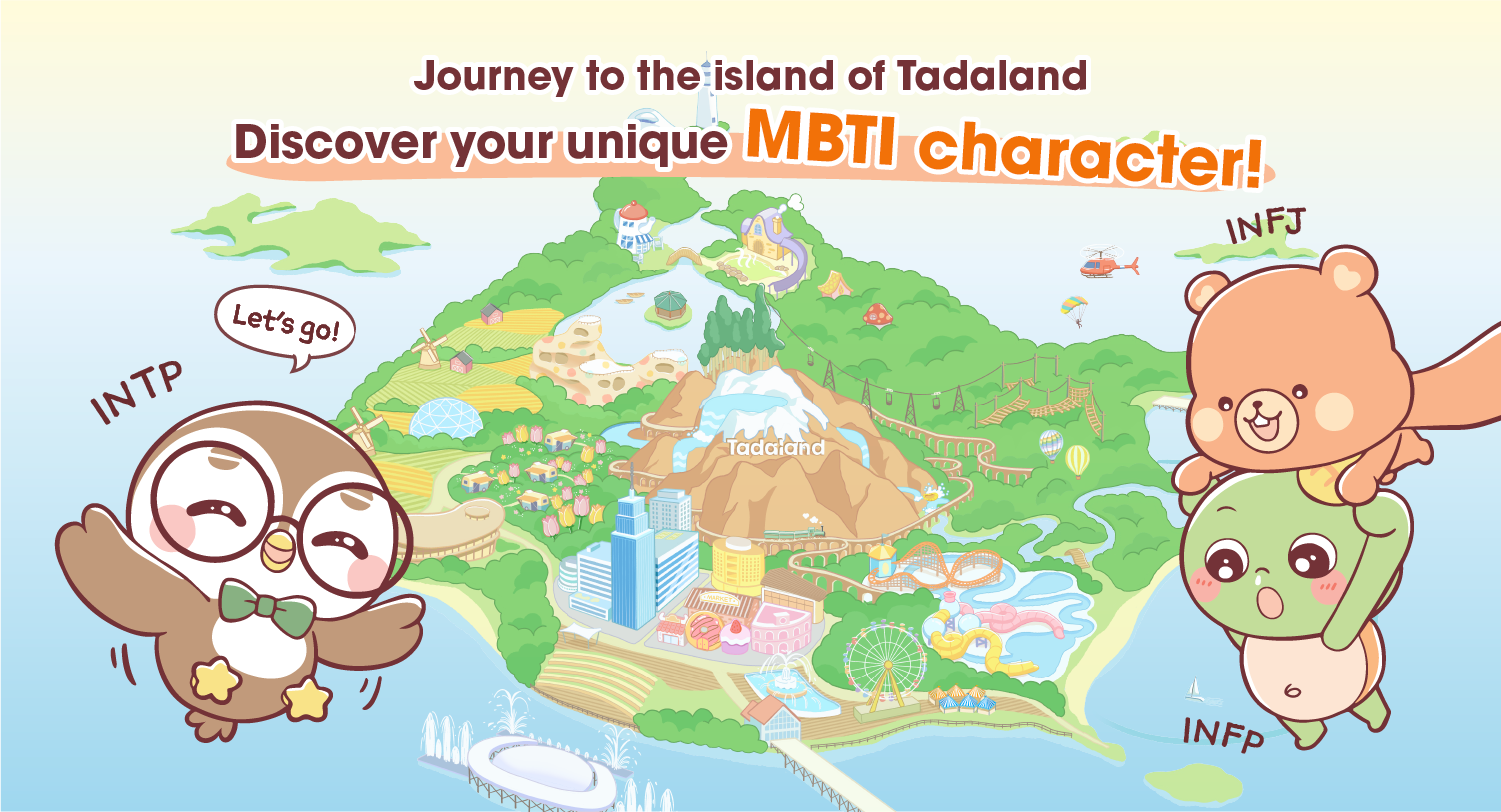
| INFJ | Roro | Understanding why the work matters | Pure numbers with no human reason attached |
| INTJ | Jimi | The full picture, then autonomy to execute | Micromanagement and meetings that could be a message |
| ISTP | Nico | A concrete problem and space to solve it | Long alignment calls before anyone touches the work |
| ISFP | Mellow | Room to do it their own way | Rigid templates and public criticism |
| INFP | Apollo | Work that lines up with what they believe | Being asked to defend a position they find hollow |
| INTP | Cappu-Cappu | Time to think before being asked to commit | Forced instant answers in a live meeting |
| ESTP | Hoola | Fast decisions and visible results | Process for its own sake |
| ESFP | Taro | People, energy, and variety in the day | Isolation and repetitive back-office tasks |
| ENFP | Jolly | Freedom to explore an idea before locking it | Being boxed in during the first ten minutes |
| ENTP | Pierre | Permission to challenge the brief | Being told “because that is how we do it” |
| ESTJ | Cres | Clear ownership and measurable progress | Ambiguity about who decides |
| ESFJ | Pixi | A team that actually talks to each other | Silent conflict and unspoken tension |
| ENFJ | Micah | A shared goal they can rally people around | Being made the messenger for bad news they did not shape |
| ENTJ | Dante | Direction, targets, and the authority to move | Decisions that stall for weeks with no owner |
Four friction points that show up in every Hong Kong office
1. The 11pm WhatsApp message
Extraverted colleagues often think out loud, and a message at 11pm is them clearing their head, not issuing an order. Introverted colleagues read it as a demand that has just eaten their evening. Neither is wrong. The fix is a team norm, not a personality debate: agree what counts as urgent, and let everything else wait until morning.
2. "Just give me the summary" versus "let me explain the context"
Sensing types want the concrete detail: what, when, how much. Intuitive types want the shape of the thing: why we are doing it, where it leads. Give both. Two sentences of why, then the specifics. It costs you thirty seconds and saves a week of misalignment.
3. Direct feedback that lands as a personal attack
Thinking types critique the work and assume everyone knows it is not about the person. Feeling types hear the tone before the content. In a small Hong Kong team where you sit next to the person for years, the repair cost of a badly delivered critique is much higher than the thirty seconds it takes to say what is working before you say what is not.
4. Locking the plan versus keeping options open
Judging types feel calm once the plan is fixed. Perceiving types feel trapped by it. The workable compromise is a decision date: we explore until Thursday, then we commit. Everyone gets the mode they need, in sequence rather than in conflict.
If you manage people
The most common mistake managers make is assuming their own type is the neutral setting. If you are an ENTJ who thinks quickly and decides publicly, you will accidentally build a team where only fast, loud thinkers get heard, and your INTP will quietly have the best idea in the room and never say it. Ask for input in writing before the meeting. You will get a different, better team.
Bring this to your team properly
Reading a table is a start. Doing it together in a room is what actually changes how a team talks to each other. Tadaland runs MBTI workshops for Hong Kong companies, schools and NGOs, built around the 16 Tadamates so that the language is warm rather than clinical. If that would help your team, get in touch here.
A note on MBTI at work
MBTI-style type is a conversation tool, not a psychometric hiring instrument. It should never be used to screen candidates, assign roles, or justify a decision about someone's career. We write about it because it gives people a kind, structured vocabulary for difference, and that is exactly where its value ends and where good management begins.