

MBTI and Money: How Each Type Spends and Saves
Two people on the same Hong Kong salary can end the month in completely different places, and the gap is rarely about discipline. It is usually about what money is doing for each of them: buying safety, buying freedom, buying good evenings with people they like, or buying the feeling of being ahead. Personality does not decide your income and it will not pay your rent, but it does a decent job of explaining which leak in your budget you keep failing to notice.
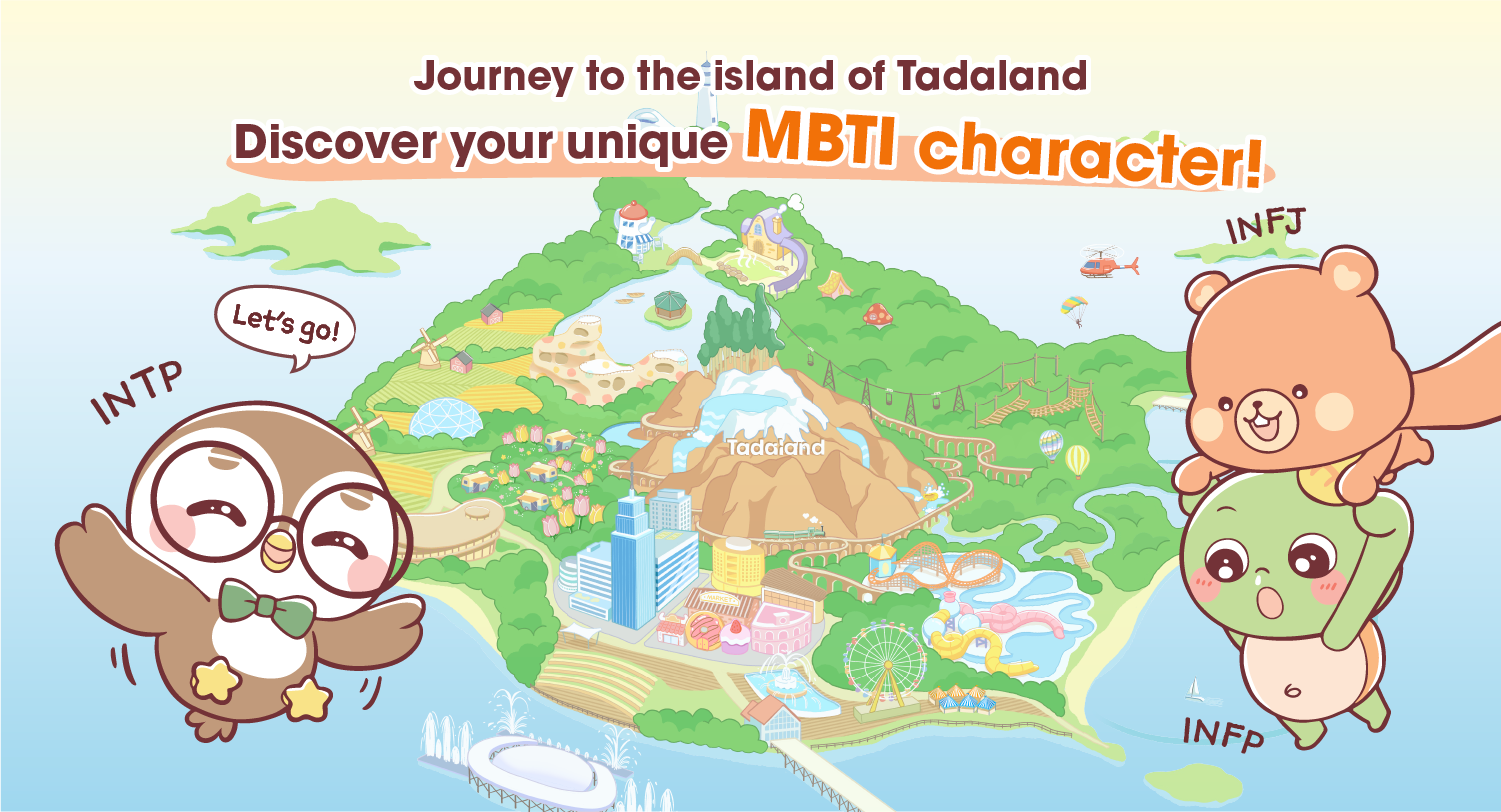
This is a guide to spending habits, not financial advice — we are not licensed advisers and nothing here is a recommendation about your money. If you want your four letters first, take our FREE 16 Personalities - Tadaland MBTI Test! and then find your row below.
What each of the 16 types tends to do with money
Read your own row honestly, then read the row of whoever you split bills with. The second one is usually the more useful.
| Type | Spending pattern | The blind spot |
|---|---|---|
| ISTJ | Saves by default, tracks everything, hates surprises. | Underspending on things that would genuinely improve daily life. |
| ISFJ | Careful for self, generous for family. | Quietly absorbing costs that were never theirs to carry. |
| INFJ | Spends on meaning: causes, courses, one good object. | Avoiding the numbers entirely because looking feels grubby. |
| INTJ | Long-horizon, systems-minded, optimises hard. | Over-engineering the plan and skipping the boring habit. |
| ISTP | Frugal on the ordinary, decisive on the tool or gear. | A single large impulse buy undoing three months of restraint. |
| ISFP | Buys beauty — space, clothes, food that feels right. | Small aesthetic purchases that never register as a category. |
| INFP | Generous, values-led, uneasy about money as a topic. | Not asking to be paid back, ever. |
| INTP | Indifferent to status, will research a purchase for weeks. | Admin drift — unused subscriptions, unclaimed refunds. |
| ESTP | Fast, confident, comfortable with risk. | Deciding in the moment and calling it instinct afterwards. |
| ESFP | Spends on the occasion and the people in it. | Rounds of drinks and last-minute trips, uncounted. |
| ENFP | Enthusiastic starter: new hobby, new gear, new plan. | Paying the start-up cost of eleven interests at once. |
| ENTP | Opportunistic, likes a clever play, bores of maintenance. | Chasing the interesting option over the sensible one. |
| ESTJ | Organised, target-driven, quietly competitive about it. | Measuring a life by whether the number went up. |
| ESFJ | Hosts, gifts, remembers every occasion. | Social obligation spending that is very hard to decline. |
| ENFJ | Invests in people — dinners, help, opportunities. | Funding other people's plans before their own. |
| ENTJ | Strategic, ambitious, spends to accelerate. | Assuming future income will cover a present decision. |
None of these are verdicts. They are the pattern each type most often reports about itself, and the point of reading yours is to catch the leak, not to accept it as fate.
Four money traps that are specifically Hong Kong
1. Rent eats the plan before the plan starts
In a city where housing takes such a large share of income, the "spend less on coffee" genre of advice is close to useless. The honest version is that the biggest lever most people have is a housing decision made once every year or two, not a daily one. Types who love an optimisation — INTJ, ENTJ, INTP — often spend enormous effort tuning small recurring costs while leaving the one large number untouched, because the large number is uncomfortable to reopen.
2. Eating out is not a luxury category here
In a small flat with a smaller kitchen, dining out is often the rational choice, and treating it as an indulgence to be eliminated just produces guilt and no behaviour change. Feeling types — ISFP, ESFP, ENFP, ESFJ — tend to carry the most guilt about this category despite it frequently being the one buying them their actual social life.
3. Face and obligation
Weddings, lai see, birthday dinners, colleagues' farewells, family occasions. For ESFJ, ENFJ and ISFJ readers especially, this is not discretionary spending in any emotional sense — declining costs something real. The workable move is not to stop, it is to give the category a number in advance so it stops arriving as a series of individual surprises you cannot say no to.
4. The travel deal that is not a deal
Cheap flights out of Hong Kong are genuinely cheap, which is exactly the problem for ENFPs, ESTPs and ENTPs. The flight is not the cost; the four days are. A price that low bypasses the part of your brain that would otherwise ask whether you had budgeted for the trip at all.
One change, matched to your type

If you are a planner type — ISTJ, ESTJ, INTJ, ENTJ — your fix is usually not more control. It is a deliberate, budgeted amount you are allowed to spend without justifying it. Our ISTJ Tadamate Beanie is the saver of the sixteen, and the failure mode is a decade of restraint that bought nothing anyone remembers.

If you are a spontaneous type — ESFP, ENFP, ESTP, ISFP — your fix is almost never a stricter budget, because you will not keep it. It is automation: move the savings on payday, before the month has opinions. Our ESFP Tadamate Taro is the one who buys the round, and the answer is not to stop buying rounds — it is to have already moved the money.
If you avoid the topic — INFP, INFJ, ISFP — the fix is a fifteen-minute look once a month, with a timer, and permission to stop when it goes off. Avoidance is what turns a manageable number into a frightening one.
Splitting money with someone of another type
Most money arguments between two reasonable people are not about the amount. They are about what the purchase meant. A saver watching a partner book a spontaneous trip does not see a trip, they see the safety margin shrinking. The person booking it does not see risk, they see the year going by.
The sentence that helps is not "we need to budget better". It is "what is this money buying you?" — answered literally. Safety, freedom, belonging, and status are all valid answers, and two people who name theirs out loud argue considerably less. If you want the longer version of that idea, our piece on how each type reacts to praise covers the same mechanism in a different setting, and our Starbucks order guide is the lighter take on daily spending.
You can find your own character, and your partner's, on our Tadamates page.
If money is causing you real distress
There is a point where this stops being a personality question. Debt, sustained anxiety about bills, or sleeplessness about money are not budgeting problems and no article of this kind will help. Speaking to someone is the right step, and free confidential help exists in Hong Kong: the Samaritan Befrienders Hong Kong on 2389 2222 and Suicide Prevention Services on 2382 0000, both 24 hours. There is no threshold you have to reach before you are allowed to call.
An editorial note
MBTI-style typing is a framework for conversation and self-reflection, not a scientific assessment, and it should never be used to judge anyone's competence with money or anything else. Nothing in this article is financial advice, and for decisions that matter you should speak to a qualified professional rather than a personality guide.