

MBTI Sensing and Intuition: From an Idea to One Example
The slide says “make it more welcoming”. Yan draws a wide circle around the phrase; Kit asks where a first-time visitor should put their bag. Both are trying to improve the same community workshop, but one is looking for a pattern and the other for something a person can actually do. An MBTI Sensing–Intuition lens can help us notice that difference. The useful next move is not to decide who is practical or imaginative, but to connect the idea to an example and then ask what the example leaves out.
Explore your preferences with our FREE 16 Personalities - Tadaland MBTI Test!. Treat the result as a starting question, not an instruction manual for someone else.
One phrase, two unfinished pictures
Here is a fictional scene. A small volunteer team is preparing a Saturday craft workshop in a Hong Kong community room. Yan imagines a place where newcomers can join without feeling they have interrupted a private party. Kit pictures the doorway: a wet umbrella, three occupied tables and someone trying to work out whether the empty chair is available. Neither picture is wrong. Neither is complete.
Yan adds “a sense of belonging” to the slide. Kit asks whether the entrance table needs a sign. Yan hears a large idea being reduced to furniture; Kit hears another phrase that cannot tell a volunteer what to do at the door. The discussion gets no further, although both people have supplied information the workshop needs.
Their first repair is small. Kit asks, “Can we walk through one arrival?” Yan agrees, provided they return afterwards to the wider purpose. They have not settled a personality argument. They have agreed on the next piece of work.
What Sensing and Intuition actually describe
In the Myers & Briggs Foundation's preference framework, Sensing gives attention to concrete information, details and experience. Intuition gives attention to patterns, meanings and possibilities. These are ways of taking in information, not rankings of intelligence. The same framework says that everyone uses both.
That distinction matters because “practical versus creative” closes a conversation too early. Someone who wants to see the materials may invent an excellent new arrangement. Someone who starts with a possibility may be meticulous when checking whether it works. An opening question tells you what information a person is seeking now; it does not establish their whole type.
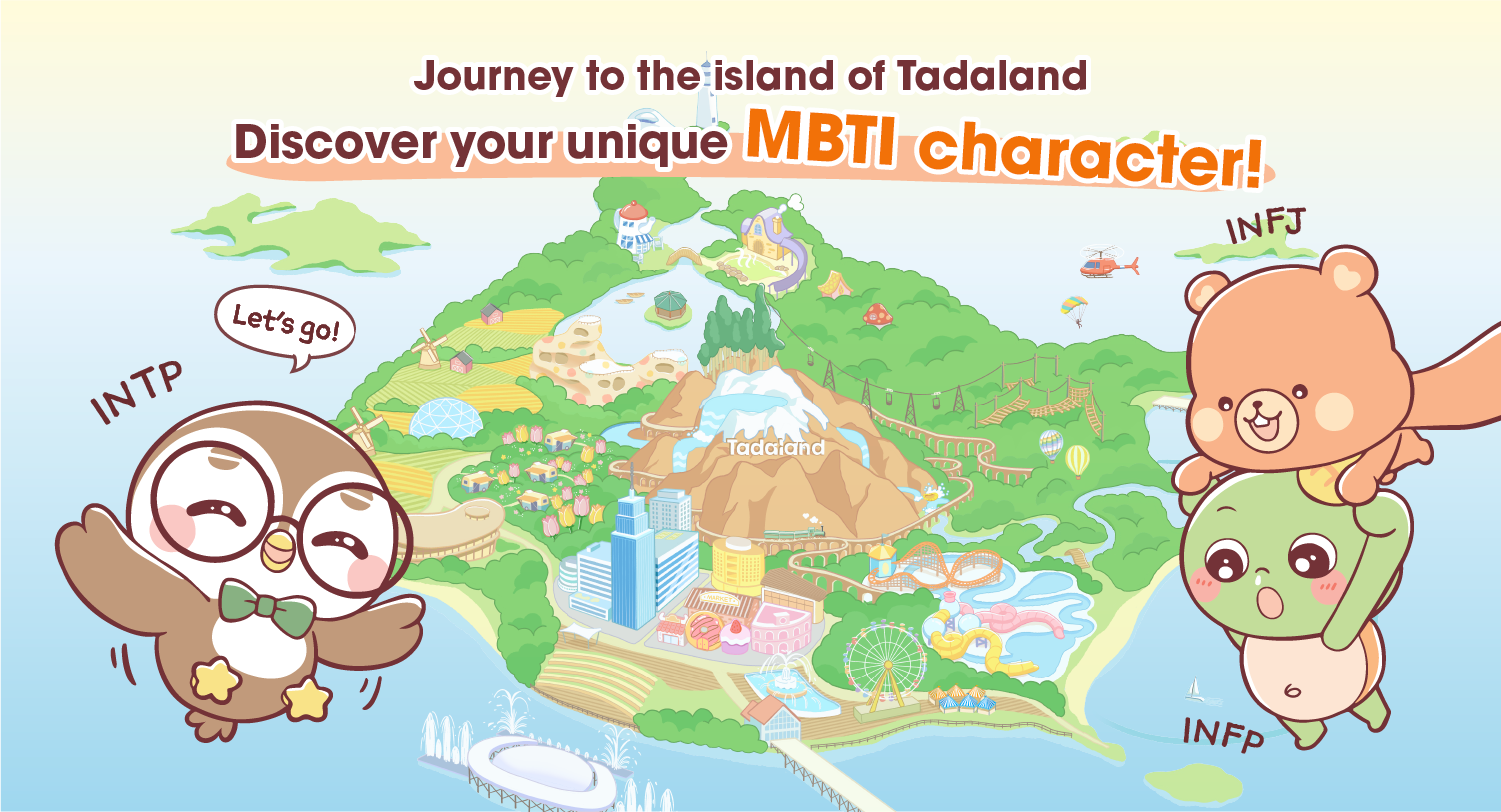
Tadaland gives these preferences faces without making them rules. Beanie, the ISTJ Tadamate, offers a character connection to present responsibilities, while Jolly, the ENFP Tadamate, brings a playful, creative character theme. They are illustrations within the Tadaland world, not evidence that all ISTJs or ENFPs behave alike. Yan and Kit need no four-letter labels for their conversation to improve.
Give the idea one ordinary arrival
They choose an imaginary visitor who arrives alone with an umbrella and a bag. Kit walks from the doorway to an empty chair while Yan notices what the visitor would need to know. Is this seat free? Must they already know how to make the craft? Are materials shared? The broad word “welcoming” now has three places where it could become visible.
Instead of designing a perfect welcome, they choose one action: a volunteer will point out an available seat and explain that beginners can start with the simple version. Kit writes the action down. Yan checks that it serves the original purpose rather than merely making the queue move faster. The example has become useful because it carries both a detail and a reason.
You can try that move without a workshop. If a colleague asks for a clearer report, ask which decision the first page should help a reader make. If a study partner says they understand a concept, invite them to work through one problem and explain why each step belongs. Our DSE revision guide offers a wider set of study situations to consider. Choose a method for the actual task, not because a type label supposedly requires it.
Then ask where the example breaks
One smooth arrival is not the whole workshop. Yan asks what happens if two friends arrive together, or if someone would rather watch before joining. Kit notices that pointing every visitor immediately towards a chair could create a new pressure. They add an option to look around first. The first example has not been wasted; its limit has shown them what else to check.
This is where an example can become a trap. Once a team has rehearsed one neat case, it may treat every different case as an inconvenience. Keep the broader question beside it: are people able to understand their options and choose how to join? That purpose helps distinguish a useful adjustment from an unrelated new idea.
The reverse trap is to generate possibilities indefinitely. Yan could imagine arrivals all afternoon. Kit asks which two situations need an answer before Saturday and who will check them. Exploring exceptions does not require postponing every decision. A working plan can be limited, explicit and revisable.
Ask for missing information, not a different personality
“You are too abstract” invites a defence. “Could you show one example of what a visitor would see?” asks for information. Likewise, “You are stuck in the details” dismisses a contribution. “What larger aim does this arrangement support?” lets someone connect a detail to its purpose. The question changes the next action rather than naming a flaw.
For the person receiving the question, a brief answer may be enough: offer one case, explain the reason and name what is still undecided. You do not have to convert every idea into an exhaustive checklist before anyone can discuss it. Nor must you agree to an idea simply because someone has explained its purpose. Understanding and agreement are separate tasks.
In a team, the chair can keep both routes open by asking for the purpose and a worked example before choosing. Our Hong Kong office guide broadens that conversation to everyday collaboration. Do not use preferences to allocate all imaginative work to one person and all checking to another. Ask what people can contribute and what the work needs.
Keep the circle and the doorway
On Saturday in our fictional workshop, Yan's circle is still on the planning sheet. Beside it is Kit's short arrival note, with an option to watch first. The circle did not tell anyone where to put an umbrella. The arrival note did not, by itself, explain why choosing freely mattered. They needed each other.
Next time an idea sounds too vague, ask for one case. Next time a case feels too narrow, ask what it is meant to show and where it stops working. You do not need to settle another person's type before asking either question. Sometimes the idea becomes larger only after somebody has made it small enough to examine.
🌟 You May Also Like
Find your Tadamate
Every type in this article has its own Tadamate. Pick yours and take it home.
 ENFP · Jolly
Jolly enamel pin
$48.00
Shop now →
 ENFP · Jolly
Jolly pen with charms
$19.00
Shop now →
 ISTJ · Beanie
Beanie enamel pin
$48.00
Shop now →
 ISTJ · Beanie
Beanie pen with charms
$19.00
Shop now →
Not sure of your type?Take the free test