

The “Golden Pair” Theory in MBTI: Why Some Couples Feel Destined And Others Feel Doomed✨
Opposites Attract, Two Peas in a Pod, and What Compatibility Really Means
Are some MBTI couples truly meant to be?
If you’ve ever typed “MBTI Golden Pair” into Google at 2 a.m., you’re not alone. It’s one of the most searched MBTI terms — because behind it sits a deeply human question:
Why does this relationship feel so natural… while another feels exhausting, even when both people care?
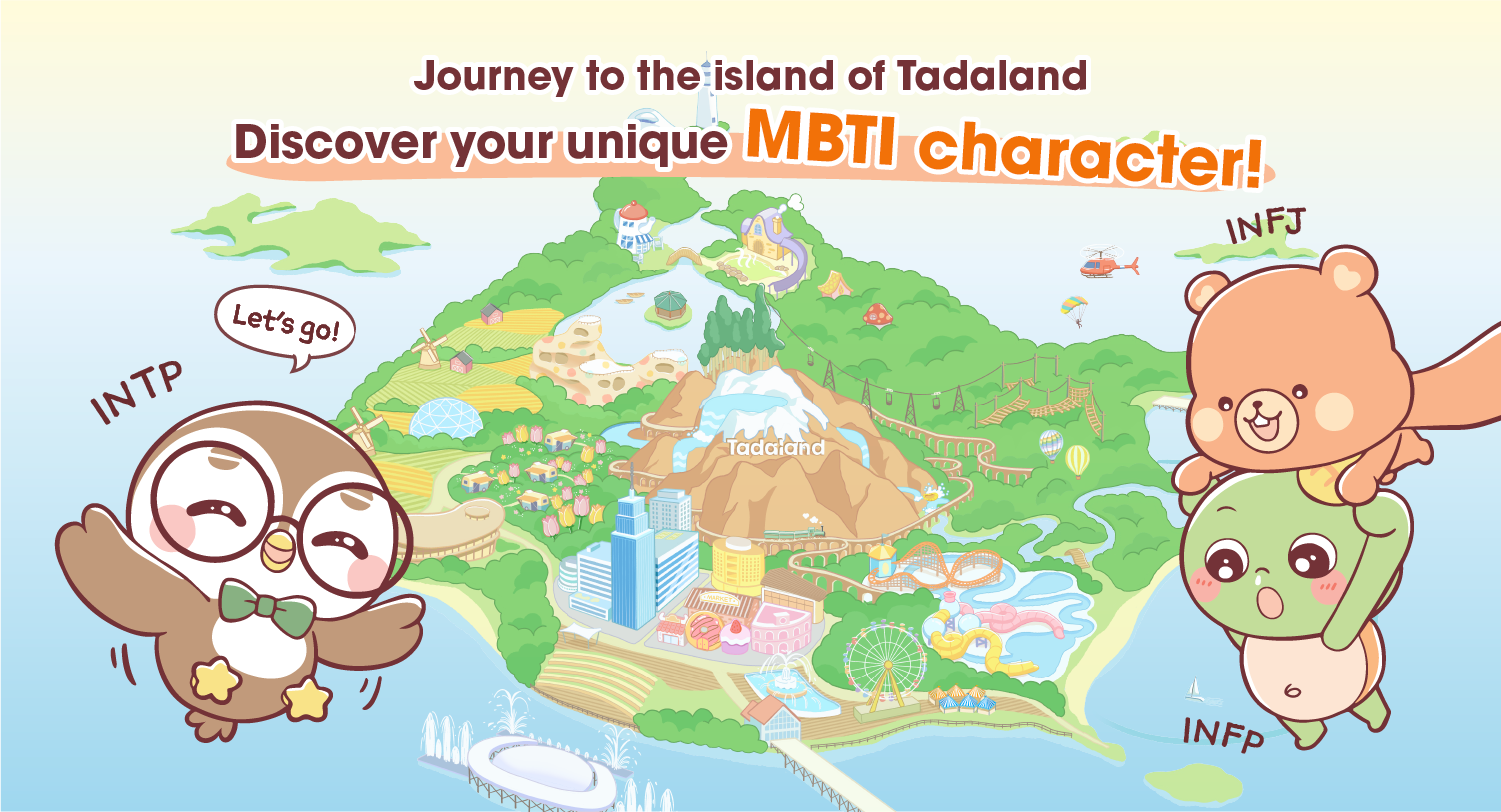
This article breaks down the MBTI Golden Pair theory, compares the pull of “opposites attract” with the comfort of “two peas in a pod,” and adds a Tadaland lens using character pairings to make these dynamics feel real, not theoretical.
What Is the MBTI “Golden Pair” Theory?
In MBTI discussions, a Golden Pair usually refers to two types that:
● Share core values (often intuition vs sensing, thinking vs feeling)
● Differ in energy flow or structure (E/I, J/P)
● Naturally expose each other’s blind spots
Commonly cited Golden Pairs include:
● ENFP ↔ INTJ
● INFP ↔ ENFJ
● ENTP ↔ INFJ
These pairings often feel magnetic. Each person seems to carry something the other lacks — direction, warmth, vision, grounding.
But there’s a catch most compatibility charts don’t emphasize:
Golden doesn’t mean easy. It means meaningful friction.
Opposites Attract: The Spark That Changes You 🔥
Why It Feels So Intense
Opposite-leaning MBTI couples often experience:
● Strong curiosity (“How do you even think like that?”)
● Rapid personal growth
● A sense that life feels bigger together
Tadaland “Opposites Attract” Illustrations

INFP Apollo 菠蘿龜 🐢 × ENFJ Micah 飯糰雪橇犬 🐕
The inner dreamer meets the outward encourager.

INTJ Jimi 芝麻鷹 🦅 × ENFP Jolly 啫喱海豚 🐬
Vision meets possibility.

INFJ Roro 蛋卷松鼠 🐿️ × ENTP Pierre 啤梨變色龍 🦎
Depth meets disruption.

ISTJ Beanie 腰豆蟻 🐜 × ESFP Taro 香芋燕 🐦
Structure meets spontaneity.

ENTJ Dante 蛋撻獅子 🦁 × ISFP Mellow 棉棉兔 🐰
Drive meets sensitivity.
The Hidden Risk ⚠️
Opposites attract… until:
● Communication styles clash under stress
● One feels “too much,” the other “too cold”
● Growth turns into constant negotiation
These couples don’t struggle because they’re incompatible —
they struggle when translation turns into judgment.
Two Peas in a Pod: Comfort, Safety & Effortless Understanding 🌱
Why It Feels So Calm
Similar-type couples often enjoy:
● Shared rhythms and values
● Feeling deeply understood without explaining
● Emotional safety and predictability
Tadaland “Mirror Pair” Illustrations

ISFJ Mozzarella 芝心雞 🐔 × ESFJ Pixi 爆谷牛牛 🐄
Care, reliability, and responsibility.

INFJ Roro 蛋卷松鼠 🐿️ × ISFP Mellow 棉棉兔 🐰
Quiet depth meets gentle presence.

INTP Cappu-Cappu 咖啡貓頭鷹 🦉 × INTJ Jimi 芝麻鷹 🦅
Shared logic, low drama.

ESTJ Cres 冰皮狼 🐺 × ISTJ Beanie 腰豆蟻 🐜
Execution, order, and stability.

ESFP Taro 香芋燕 🐦 × ESTP Hoola 冬甩象 🐘
High energy, action-first living.
The Hidden Risk ⚠️
Too much similarity can lead to:
● Emotional or intellectual stagnation
● Avoidance of hard conversations
● Comfort quietly replacing curiosity
These couples thrive only when they invite difference intentionally.
So… Which Is Better: Golden Pair or Mirror Pair?
Here’s the truth most MBTI articles won’t say clearly:
Compatibility predicts friction — not success.
● Golden Pairs work when both partners choose growth over comfort
● Mirror Pairs work when both partners choose growth over stability
Neither dynamic is superior. They simply demand different kinds of maturity.
Tadaland Takeaway 💫
In Tadaland terms, love isn’t about finding the correct pairing on a chart.
Whether you’re Apollo 菠蘿龜 (INFP) searching for meaning, or Dante 蛋撻獅子 (ENTJ) chasing momentum, what matters most isn’t who complements you on paper — but how your two characters evolve together over time.
MBTI doesn’t choose your love story.
Self-awareness writes the ending.
A Final Grounding Note: How to Use “Golden Pair” Theory Wisely 🧭
The MBTI Golden Pair theory is best used as a reference, not a rulebook. Its real value lies in helping people notice patterns — how they handle conflict, express care, seek closeness, or protect autonomy — rather than deciding which relationships are “destined” or “doomed.” In real life, relationship health depends far more on self-awareness, emotional maturity, life stage, personal history, and communication skills than on personality type alone. When used thoughtfully, MBTI offers a shared language for understanding differences that already exist. Think of Golden Pairs as a map, not a prophecy — useful for orientation, but never a substitute for choice, effort, and growth.
👉 Curious how you show up in relationships?
Explore your personality and Tadaland character here:
https://16characters.tadaland.net/