

The Introvert's Guide to Hong Kong: Where to Actually Be Alone
Hong Kong has roughly 6,700 people per square kilometre, one of the highest densities on earth, and a housing stock that puts most adults within three metres of a family member at all times. If you are an introvert here, the problem is rarely that you lack the will to be alone. It is that there is nowhere to go and do it.
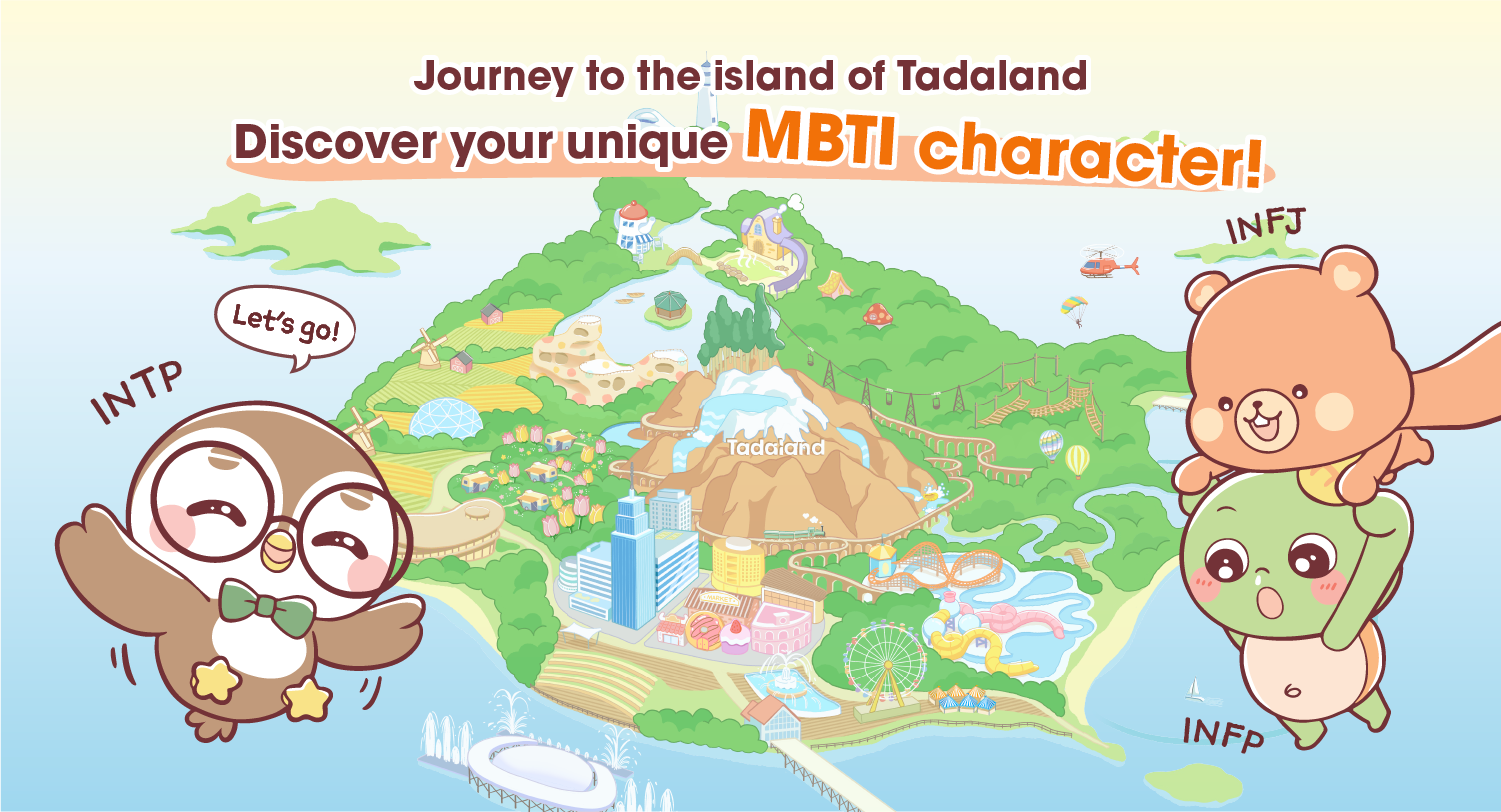
This is a practical guide rather than a personality quiz — though if you are not sure whether solitude is a preference or a habit for you, the FREE 16 Personalities - Tadaland MBTI Test! is the fastest way to find out.
First: the thing you actually need is not silence
Introversion is not noise sensitivity, though the two often travel together. What drains an introverted type is being addressed — the low continuous demand of having to respond, react, and be pleasant. A crowded MTR carriage where nobody expects anything of you can be genuinely restorative. A quiet room with one chatty flatmate is not.
That distinction matters, because it opens up a city that otherwise looks hostile. You do not need an empty place. You need an anonymous one.
If you want to test it on yourself, three questions sort it quickly. After an hour in a packed but anonymous place — a food court, a ferry deck, a busy park bench — do you feel steadier or worse? If steadier, noise is not your problem. Second: does a video call tire you faster than the same conversation in person? If yes, it is the demand to perform attention, not the volume. Third: is the worst part of your day the commute, or the ten minutes after you walk in the door and three people need something? Almost everyone who thinks they need quiet actually needs the second thing to stop.
The practical consequence is that you can stop hunting for a silent room, which in this city does not exist. Anonymity is cheap and everywhere. Silence is expensive and mostly unavailable.
How much you actually need, and how to tell you are running low
There is no universal dose, but the shape is consistent: most introverted people need a small daily amount plus one longer block a week, and the daily one matters more. Fifteen to thirty minutes a day, taken reliably, does more than a whole Saturday taken once a month. This is the single most useful thing in this article, and it is the part people skip.
The warning signs arrive in a predictable order, and learning yours is worth more than any location tip below. First, small talk starts to feel physically effortful — you can hear yourself producing it. Second, you begin declining things you would normally enjoy, and telling yourself you are just tired. Third, you get short with the people you live with over something trivial, which is the stage most people first notice, and by then you have been running low for about a week.
If you can learn to act at stage one rather than stage three, the whole problem becomes much smaller. Stage one costs twenty minutes. Stage three costs an argument and an evening.
One honest caveat. If withdrawing does not restore you — if you take the time alone and come back just as flat, week after week — that is not introversion doing its job, and no amount of solitude will fix it. Persistent low mood, losing interest in things you used to like, or feeling that you cannot face people at all are worth talking to someone about. In Hong Kong there is free, confidential, 24-hour support: the Samaritan Befrienders Hong Kong on 2389 2222 and Suicide Prevention Services on 2382 0000. Wanting to be alone is normal. Not feeling better afterwards is the part worth paying attention to.
Where to actually be alone in Hong Kong
The country parks, which are the real answer
About three quarters of Hong Kong is undeveloped, and a great deal of it is a forty-minute journey from Central. Midweek, a good stretch of the MacLehose or the quieter sections of the Wilson Trail will give you hours of genuine solitude. Weekends are a different city entirely — if you can go on a weekday, go on a weekday.
The mistake is treating this as an expedition. A two-hour window is enough for a short section and back, and the recovery comes from the walking rather than from finishing anything. Nobody is marking your route.
Public libraries, which are underused for this
Air-conditioned, free, open long hours, and socially legible: nobody wonders why you are sitting there. For anyone living in a flat with no door of their own, a library is the cheapest private office in the city.
The social legibility is the real asset. A teenager who says "I am going to the library" gets no argument, where "I want to be by myself" starts one. That is worth knowing if you are negotiating with family rather than with a landlord.
Ferries, which are the most efficient trick here
The Star Ferry gives you eight minutes. The outlying-island routes give you an hour, with a seat, a view, and a hard boundary at each end that means nobody can extend the trip. A return sailing to Peng Chau or Mui Wo is one of the few ways in Hong Kong to buy a fixed block of solitude for the price of a coffee.
The hard boundary is the point. Solitude that could be interrupted at any moment does not restore you, because part of your attention stays on watch. A sailing cannot be cut short, and that is why an hour on a ferry beats an hour at home with the door shut.
Early mornings, which are a location as much as a time
The same promenade that is unusable at 7pm is empty at 7am. Introverts who cannot find space often have not tried moving in time rather than in space. Waking an hour early is a smaller cost than most people assume, and it is the only reliable way to get solitude if you live with family.
It also has a property none of the others do: nobody has asked you for anything yet. Solitude taken before the day starts is genuinely different from solitude taken after you are already depleted.
Museums and galleries on weekday afternoons
Quiet by convention, and they give you something to look at, which matters more than it sounds — solitude with a focal point is much easier to sustain than solitude in a blank room. If your mind races the moment you sit still, an object to rest your attention on does most of the work for you.
Which types need this most, and what form it takes
| Type | Tadamate | The kind of alone that works |
|---|---|---|
| ISTJ | Beanie | A routine nobody interrupts — the same walk, the same seat, the same hour |
| ISFJ | Mozzarella | Time when nobody needs anything — the hardest kind for them to claim |
| INFJ | Roro | Long, unstructured, outdoors; they need room to finish a thought |
| INTJ | Jimi | Uninterrupted depth — a library desk beats a scenic view |
| ISTP | Nico | Alone but moving — a ride, a climb, a long walk with a destination |
| ISFP | Mellow | Somewhere beautiful, with no one asking them to explain why |
| INFP | Apollo | Anonymous rather than empty — a busy café where nobody knows them |
| INTP | Cappu-Cappu | Hours with no obligation to conclude anything |
Extraverted types are not exempt from needing recovery — they simply refill in company rather than away from it. If that is you, the version of this article you want is our guide to how each of the 16 types rests and recovers, which covers all sixteen rather than the introverted eight.
How to claim it without a fight
Name it as a need, not a verdict on the people you live with
"I need an hour on my own" is heard by many families as "I want to get away from you". Saying the second half out loud — "it is not about you, I come back better" — removes almost all of the friction. This is the single most common source of low-level household tension we hear about, and it is usually solved by one sentence rather than by moving out.
Schedule it before you need it
Solitude taken after you are already depleted is damage control. Twenty minutes taken on a normal Tuesday is prevention, and it costs a fraction as much. Introverts who wait until they are desperate tend to take it abruptly and unkindly, which then confirms everyone's suspicion that it was about them.
Accept that a small amount, reliably, beats a large amount, occasionally
A monthly day off alone is worth less than fifteen minutes every day. The nervous system responds to regularity, not to volume — which is fortunate, because in this city regularity is the only one of the two that is actually available.
One thing worth saying plainly
Needing to be alone is not a social deficiency, an anxiety symptom, or something to grow out of. It is a preference in how you refill, and roughly half the population shares it. If you have spent years apologising for it, the useful reframe is that you are not asking for an exemption from other people — you are arranging to be better company when you return.
If the people around you read your quietness as distance, this piece on why INFPs and INFJs suddenly disappear is worth sending them. And to find out which of the sixteen you actually are, take the free Tadaland MBTI test and meet your Tadamate.