

Why Your K-pop Bias Isn't Your MBTI Type
Somewhere in every fandom is the assumption that your bias shares your personality — that the member you gravitated to is the one you are most like. It is a lovely idea and it is usually wrong. Attraction and similarity are different mechanisms, they often pull in opposite directions, and confusing them is the most common way people end up with the wrong four letters attached to themselves for years.
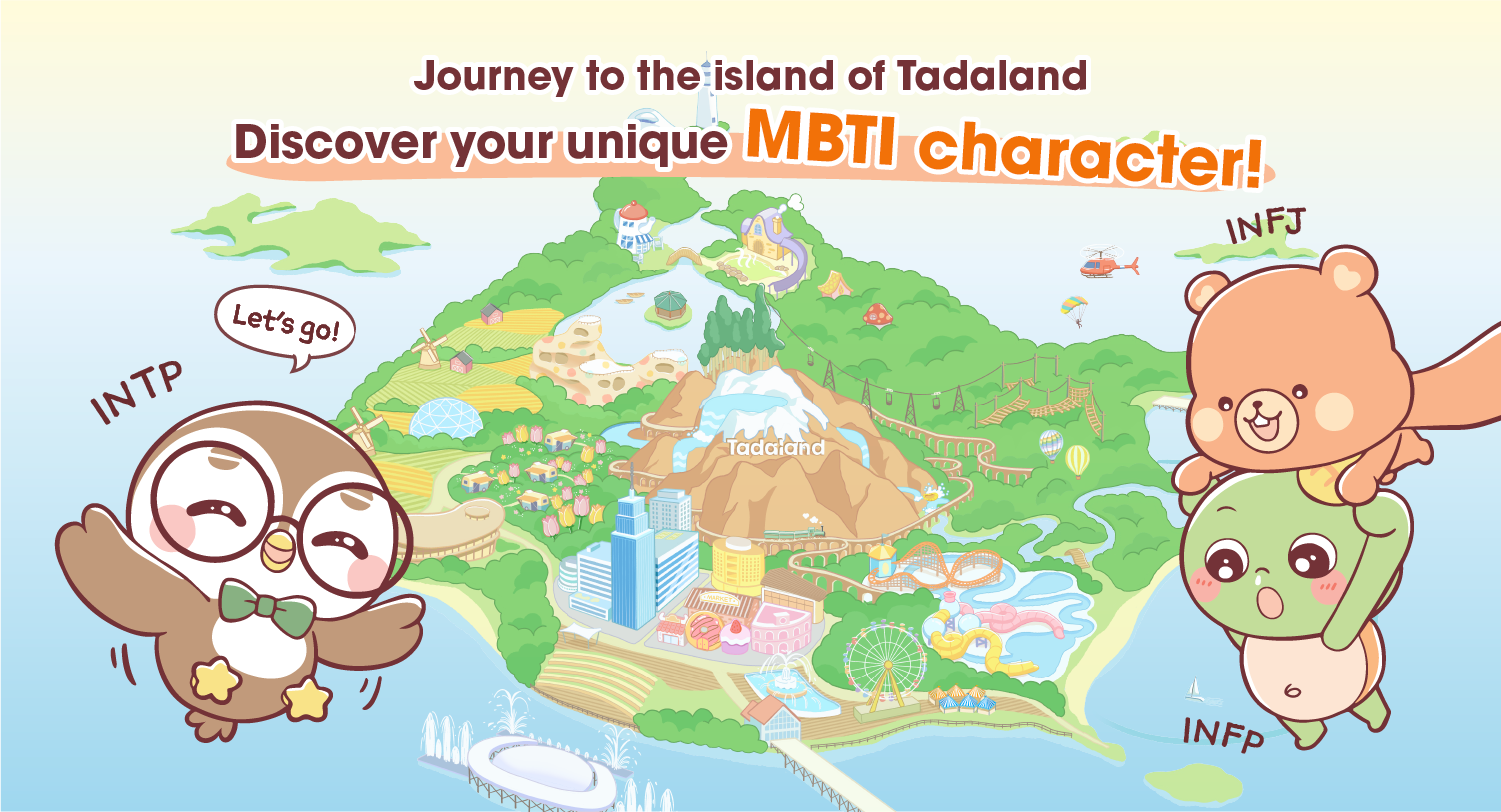
The reliable way round it is to test rather than infer: the FREE 16 Personalities - Tadaland MBTI Test! takes a few minutes and asks about you rather than about anyone you admire.
Attraction and similarity are not the same mechanism
Ask someone why they chose their bias and the answer is almost never "because he is like me". It is that she is fearless on stage, that he says the thing everyone else is thinking, that she seems completely unbothered. These are descriptions of a gap, not a match. What draws attention is very often the thing the watcher does not have and quietly wishes they did.
That is worth stating plainly because it inverts the usual reasoning. If a quiet person is captivated by the loudest member of a nine-piece group, the honest reading is not "I must be an extravert after all". It is closer to: here is a person doing the thing I find hardest, and watching them do it easily is a pleasure. The pull is real. It is simply not evidence about your own wiring.
Similarity does produce a different feeling, and it is much quieter — recognition rather than fascination. It tends to attach to the member people describe as underrated: the one who is a bit awkward in variety shows, who answers questions slightly too honestly, who visibly needs a minute after a performance. Fans rarely build their whole identity around that member. They just find them oddly comfortable to watch.
So both feelings carry information. They carry different information, and only one of them is about you.
Three ways fandom typing goes wrong
The persona is a product
A concept is designed, a stage name is chosen, a role within the group is assigned and then reinforced for years across variety appearances, fan meetings and content specifically produced to make members legible to newcomers. Every group has a designated bright one, a designated cold one, a designated chaotic one. Those roles are real jobs. They are not personality readings, and the tidiness of the line-up is a strong hint that something has been arranged rather than observed.
Fan-attributed types travel further than self-reported ones
Some idols have taken the test publicly and said what they got. Far more have a type circulating that no one can source, invented by fans from a compilation clip and repeated until it looks official. The second kind outnumbers the first and spreads faster, because a confident answer is more shareable than an honest gap. This is also why the types attached to a given member change over the years — we wrote about why idols' MBTI results keep moving separately, and the short version is that some of the movement is real and a lot of it is fandom drift.
The halo runs in both directions
Once someone knows their own type, there is a strong pull to assign it to the people they admire, and an equally strong pull to adopt the type of someone they already love. Both feel like insight. Neither is. If you find yourself certain that your bias shares your letters, notice that this is the single most flattering possible arrangement of the facts, and be suspicious of it accordingly.
What your bias actually tells you
It tells you something genuinely useful — just answer a different question with it.
| What you feel | What it is evidence of |
|---|---|
| Fascination, wanting to watch them again | A capacity you value and feel short of. Useful for knowing what you want to grow, not what you already are. |
| Protectiveness, wanting to defend them | Usually a resemblance you have not admitted yet. This one is closer to a type signal than fascination is. |
| Quiet recognition, finding them restful | The strongest similarity signal of the three, and the one fans discount most because it is undramatic. |
Read that way, a bias becomes a decent mirror. The member you would defend in an argument probably shares more of your wiring than the one whose posters you bought.
How to check yourself properly
Three habits fix most of the mistyping we see.
Answer as yourself on an ordinary Wednesday. Not as the version of you at a concert, and not as the person you are working on becoming. The test is asking about your defaults, and defaults show up in unremarkable weeks.
Do it before you read anything about the types. Once you have a favourite type — and most fans do, because certain letters have become desirable in fandom — the answers bend towards it without any conscious dishonesty at all.
Check the description against people who live with you. The parts of a type you cannot see from inside are exactly the parts a flatmate or a sibling will confirm in one sentence. If your own reading and theirs disagree sharply, theirs is worth taking seriously.
On idols' own types
Where an idol has publicly given a result, it is worth remembering it is a self-reported answer from a specific week, not a diagnosis — the same instrument can give a person different letters a year apart, especially on a borderline preference. Where a type is only fan-attributed, it is a guess wearing a uniform. We keep the sourced ones together in the K-pop MBTI database, and label them as what they are.
None of this makes fandom typing worthless. It makes it a game rather than a measurement, which is what it was always better at being. The pleasure of arguing that a member is obviously an ISFP (a Mellow, in our terms) does not require the claim to be true — but it is worth not building your own self-understanding on top of it.
To find out which of the sixteen you actually are, take the free Tadaland MBTI test and meet your Tadamate.