

Goblin MBTI: The Four Who Share the House
Most cast breakdowns run wide and shallow: twenty names, a type each, done. Goblin rewards the opposite approach, because its best writing is concentrated in four people who are stuck living in the same house and cannot leave it. An immortal, a grim reaper who has forgotten his own life, a schoolgirl who can see both of them, and a fried-chicken shop owner who refuses to be impressed by any of it. Four ways of being a person, pressed together, with centuries of consequence on one side and a part-time job on the other.
Before anything else: these are our readings of fictional characters, not official statements and not claims about the actors. There are mild spoilers below, kept to setup rather than endings. If you want your own four letters instead of a guess, the FREE 16 Personalities - Tadaland MBTI Test! takes about ten minutes.
Why a forced household is such good material
Personality shows up most clearly when someone cannot walk away. A workplace lets people manage each other at arm's length; a romance lets people perform. A shared flat where nobody can leave strips both options out, which is why so much of what we understand about a character here comes from small domestic friction rather than from the supernatural plot.
Goblin understood this and built its household deliberately. Two of the four are immortal and have had literal centuries to become more themselves, with no ageing to soften them and no mortality to force a decision. The other two are mortal, broke, and living at speed. Put those two clocks in one apartment and every difference of temperament becomes visible within an episode.
It is also, for once, a drama where the comedy and the tragedy come from the same source. The bickering over the sofa and the nine-hundred-year grief are the same character traits, seen at two different scales. That is the mark of characters built rather than assembled, which is the same reason the K-Drama MBTI index keeps returning to this era of writing.
Kim Shin, the goblin (our read: INFP)
The easy reading of Kim Shin is INFJ, because he is old, sad and speaks in weighted sentences. We think the evidence points to INFP, and the difference is worth explaining because it is one of the most common mix-ups in typing.
Kim Shin does not run on a vision of how things should be arranged. He runs on a private, absolute, largely unstated set of values that he will not negotiate, and he reacts to violations of them centuries after the fact. His loyalty is personal rather than principled: he is not protecting an order, he is protecting particular people, and he never fully forgives what was done to the ones he lost. He sulks. He is dramatic about small slights and quiet about enormous ones. He avoids the decisive conversation for as long as he can, then acts entirely, all at once, and mostly at his own expense.
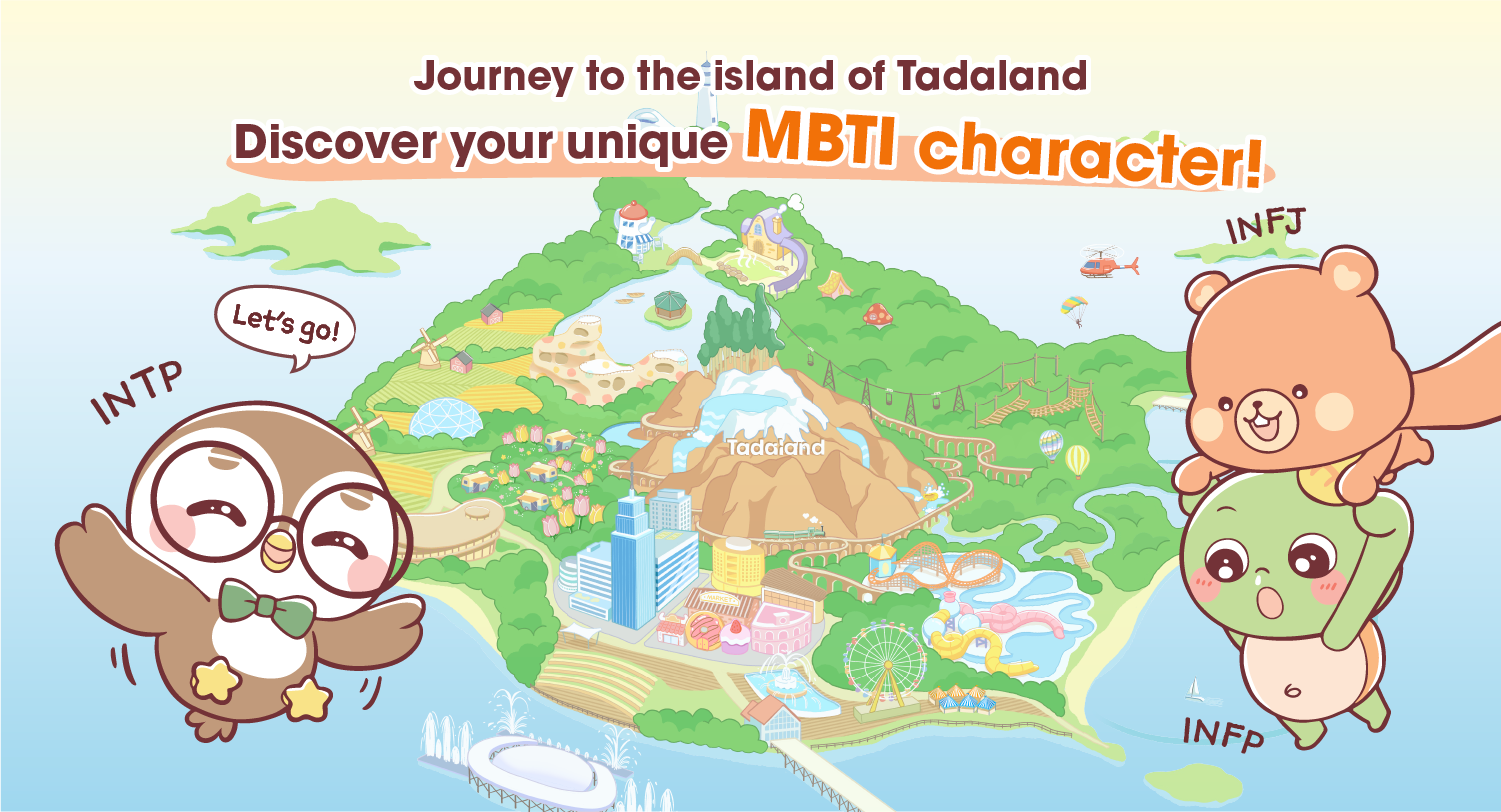
That is the Fi engine, not the Ni one: the same machinery our INFP guide lays out in full. The romanticism is not decoration on a strategist; it is the operating system. In Tadaland the INFP is Apollo, and the resemblance is in the refusal to be talked out of something felt.
The Grim Reaper (our read: ISFJ)
The reaper is the funniest character in the drama and the most quietly painful, and both come from the same trait: he takes the rules extremely seriously because the rules are the only thing he has been given.
He has no memory of who he was. What he has instead is a job with procedures, a uniform, a set of forms and an office, and he holds onto all of it the way you hold onto a handrail. He is anxious about doing things properly, deeply embarrassed by his own emotions, and reflexively caretaking: he makes the tea, he keeps the household running, he worries about whether people have eaten. He is also, notably, terrible at improvising, which is exactly why the character is funny.
ISTJ is the reasonable alternative read, and if you want to argue it, the duty and the procedure are on your side. We land on ISFJ because his attachment is to the people rather than to the system, and because when a rule and a person finally collide, the person wins and he suffers about it afterwards. The Tadamate is Mozzarella.
Ji Eun-tak (our read: ENFP)
Eun-tak is the character most often underestimated, usually because cheerfulness gets read as simplicity. Look at what she is actually doing. She has had an objectively terrible life, she is living with relatives who treat her badly, she can see ghosts, and she is still the person in the house who starts conversations, names the awkward thing out loud, and refuses to let two immortals sulk in separate rooms.
That is not optimism. It is an extraverted intuition that keeps finding another possible version of the situation, combined with a values core that will not let her be cruel about it. She negotiates, she teases, she pushes, she talks her way in. She is also genuinely disorganised about practical matters and entirely undaunted by that.
The ENFP guide covers why this type is so regularly mistaken for a lightweight; Eun-tak is the case study. The Tadamate is Jolly.
Sunny (our read: ESTP)
Sunny is the one who keeps the drama honest. She runs a business, she looks exactly as she intends to look, she says the blunt thing in a room full of people being careful, and she has no patience whatsoever for mystique.
What makes the reading ESTP rather than ENTJ is her relationship with the present tense. She is not building towards a plan; she reads the situation in front of her and responds to it immediately, with her whole self. When she is attracted to someone she says so. When she is being handled, she names it. And when she eventually discovers what she has been kept out of, her reaction is not strategic at all; it is direct, wounded and immediate.
Her self-protection is the ESTP kind: not withdrawal, but a raised chin and a sharper sentence. The Tadamate is Hoola.
What the house is actually for
Set the four side by side and the design becomes obvious. Kim Shin feels everything and says almost none of it. The reaper says the procedure out loud and cannot say the feeling. Eun-tak says everything, including the things nobody wanted said. Sunny says the one true sentence and then lets the silence sit.
The drama is not asking which of them is right. It keeps putting them in the same kitchen so that each one is forced to borrow a little of what the others do naturally: the immortal learns to state something plainly, the reaper learns to break a rule, the girl learns when not to fill a silence, the blunt one learns to wait. That is a more interesting argument about personality than any compatibility chart, and it is much closer to how people actually change each other.
It is also why the four-hander works better here than a full-cast list would. If you want the wider view, the K-Drama MBTI index reads all sixteen types as drama leads, and there are full-cast breakdowns of The Uncanny Counter S2 and Mask Girl for the wide-and-deep treatment.
And if you have been arguing that Kim Shin is an INFJ since the day it aired, keep arguing. The useful part was never the letter.