

MBTI and Fair Exceptions: Make the Reason Clear
There is one place left on Saturday's pottery session, and two names beside it. One organiser points to the booking order. Another points to a participant who missed the previous session because the lift was out of service. Both call their answer fair. Before the conversation becomes “you are too cold” or “you are too emotional”, an MBTI Thinking–Feeling lens offers a smaller, more useful question: what is each person trying to protect, and can they make the reason clear enough for others to examine?
Curious about your own starting point? Explore the FREE 16 Personalities - Tadaland MBTI Test! as a conversation starter, not a diagnosis or a substitute for asking someone what matters to them.
One empty chair, two meanings of fair
Consider this fictional Hong Kong community-centre example. Jo has kept a numbered waiting list. Wai remembers a visitor who reached the building last month but could not get upstairs. Neither organiser has promised the remaining place. The team has not agreed whether a disrupted booking should receive priority next time.
Jo worries that changing the order after seeing the names will make the list meaningless. Other people have also waited. Wai worries that counting last month's missed visit as an ordinary absence will ignore a barrier the visitor could not control. The same empty chair carries two different questions: can people rely on the process, and has the process counted the relevant circumstances?
Notice what this does not tell us. We cannot assign either organiser a complete personality type. They might exchange positions in a different situation. The example shows two reasons worth examining, not two species of person.
Thinking and Feeling are about reasons, not manners
In the Myers & Briggs Foundation's description of the preferences, Thinking gives more weight to objective principles and impersonal facts in making decisions. Feeling gives more weight to personal concerns, values and the people involved. Both are decision-making preferences. Neither is an intelligence score, a kindness score or a promise about how someone will behave.
A person with a Thinking preference can care deeply about the visitor. A person with a Feeling preference can check the waiting list carefully. Everyone can use both approaches. It is more helpful to ask which consideration someone starts with than to divide the room into people with brains and people with hearts. Most rooms, fortunately, contain both organs.
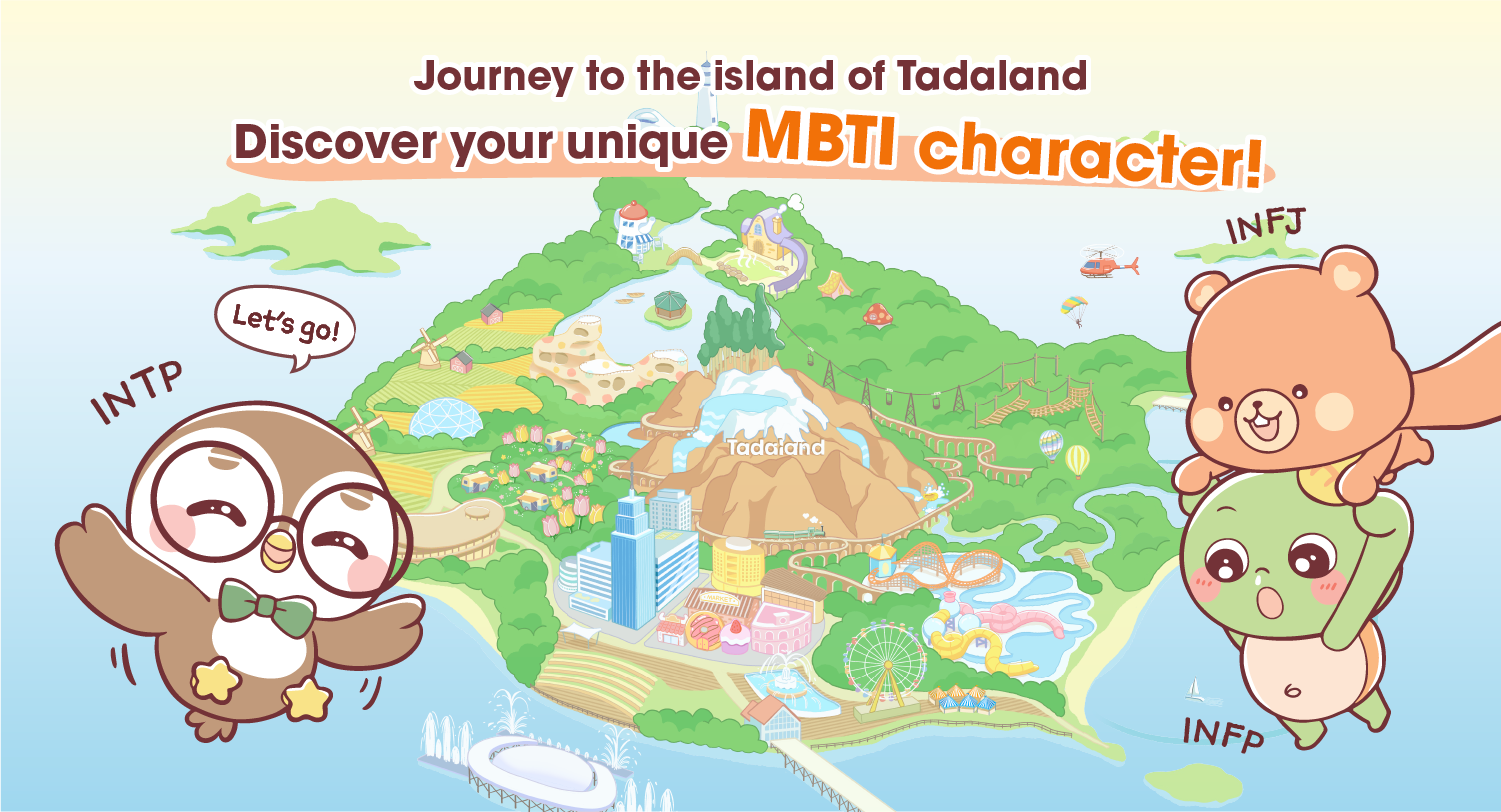
Tadaland's Cappu-Cappu, the INTP Tadamate, offers a playful doorway into examining an assumption. Pixi, the ESFJ Tadamate, opens another through the idea of a welcoming community. These are character associations, not evidence that an INTP must defend a queue or an ESFJ must grant an exception.
Write down the rule before arguing about the person
Jo and Wai put two headings on a sheet: “What is the normal rule?” and “What circumstances could justify a different route?” The first answer is booking order. The second needs more work. Sympathy for a familiar face is not yet a criterion that anyone else can use.
They separate three things. There is a known fact: the lift was unavailable. There is an unanswered question: what arrangement, if any, was offered to the visitor afterwards? Then there is a proposal: treat a centre-caused access disruption differently from a cancelled personal plan. Keeping those apart prevents an attractive explanation from quietly turning into an established policy.
The practical question becomes: would the team consider the same arrangement for someone it did not know? If not, the proposal may be personal favour rather than a defensible exception. If yes, they still need authority, enough information and an honest explanation of who else would be affected. A fair-sounding reason is the start of scrutiny, not its end.
An exception needs an owner, not a hidden helper
Wai could make the awkwardness disappear by offering to run an extra session alone. That would create a place, but also a new workload that nobody had agreed to. Care is not a spare budget, and goodwill does not manufacture another room.
Instead, the organisers take the unresolved case to the centre manager before confirming the place. They ask who can authorise a remedy for the earlier disruption, what capacity actually exists and whether the waiting-list message needs changing. They do not send the visitor's private circumstances around the group to win the argument.
In this fictional example, the manager keeps Saturday's remaining place in booking order and offers the affected visitor first choice of a place at the next session, with an accessible route confirmed beforehand. That is one possible response, not a legal ruling or a universal recipe. Its useful feature is that the responsible person states the decision and arranges the work. Neither organiser has to smuggle in an extra promise.
The same distinction matters in everyday team working: considering people includes the colleague who would have to deliver the proposed solution.
A short decision note anyone can question
For a low-stakes shared decision, try four plain sentences: “Our usual rule is…”; “The relevant circumstance is…”; “The person authorised to decide is…”; “This is what we will do, and when we will review the rule.” This is a practical writing exercise, not a validated MBTI technique.
Check the sentence most likely to go missing. People who begin with consistency can forget to ask whether the facts are genuinely comparable. People who begin with the individual can forget to explain how the same consideration would apply to someone else. These are possible blind spots in a discussion, not faults allocated permanently to T and F.
When explaining a decision, name what stays unchanged as well as what changes. Our article on making feedback specific explores a related problem: a considerate tone does not automatically give another person usable information. “We have sorted it out” may reassure the speaker while leaving everyone else guessing.
The chair is not the whole decision
The empty chair eventually has a name beside it. More importantly, the team has a clearer waiting-list message and a separate route for disruptions it caused. Jo has not stopped caring about consistency. Wai has not stopped noticing the person at the door. They have made those concerns available for the same conversation.
“Rules or people” was too small a choice. A rule already affects people; an exception already creates a precedent. An MBTI lens is useful here only if it helps us ask a question we might otherwise skip. It cannot decide whose claim wins.
The chair may be filled. The reasons should still have room to be questioned.
Find your Tadamate
Every type in this article has its own Tadamate. Pick yours and take it home.
 INTP · Cappu-Cappu
Cappu-Cappu enamel pin
$48.00
Shop now →
 INTP · Cappu-Cappu
Cappu-Cappu pen with charms
$19.00
Shop now →
 ESFJ · Pixi
Pixi enamel pin
$48.00
Shop now →
 ESFJ · Pixi
Pixi pen with charms
$19.00
Shop now →
Not sure of your type?Take the free test