

Crash Landing on You MBTI: The Full Cast
Crash Landing on You has survived several years of newer, louder dramas, and the reason is not the premise. Paragliding into the wrong country is a setup, not a story. What keeps people rewatching is that its nine or ten main characters are each built on a genuinely different way of being a person, and the plot mostly consists of putting those ways of being next to each other and letting them rub. That makes it unusually good material for a personality read.
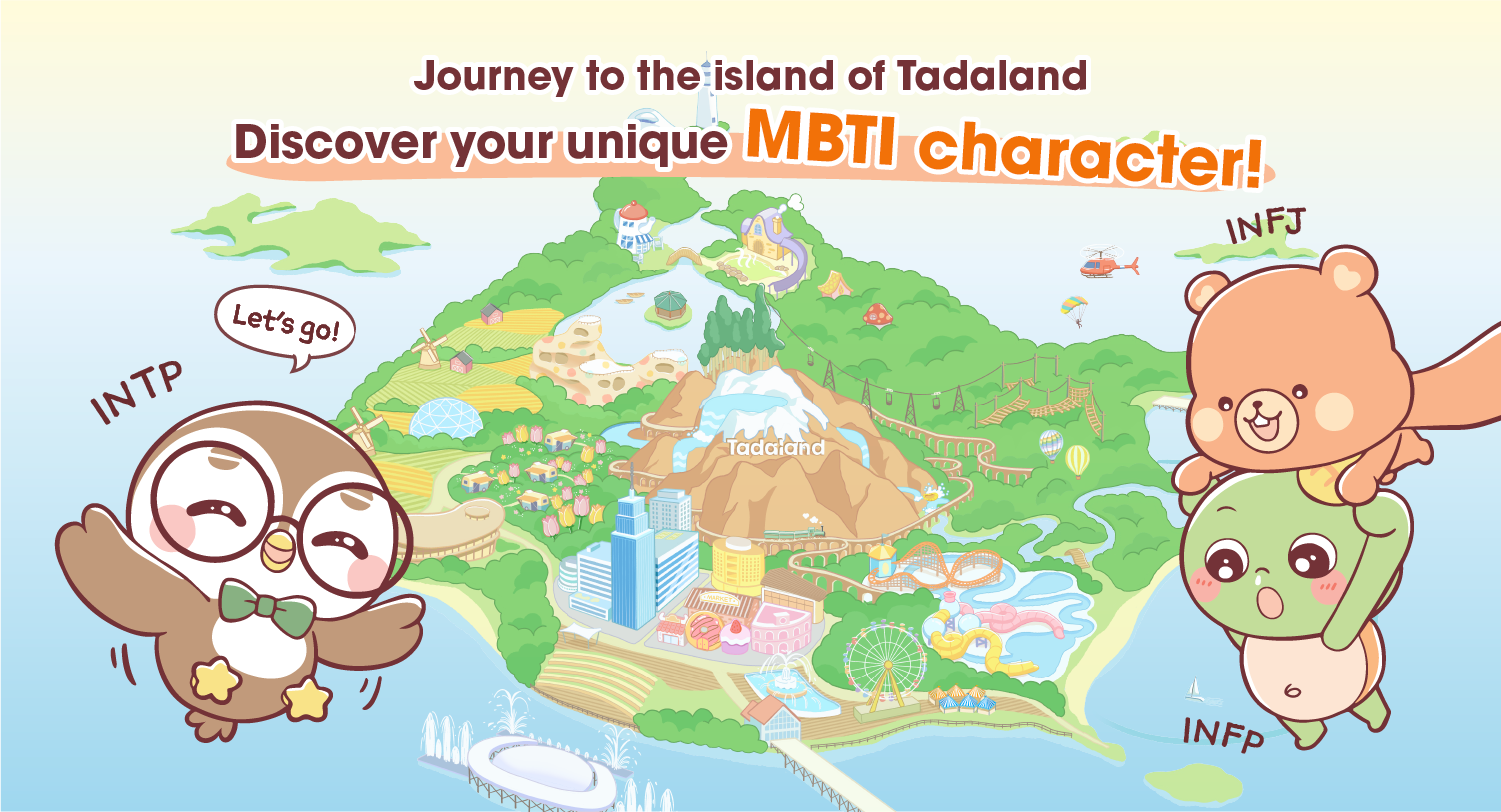
One thing before we start: everything below is our reading of fictional characters, not an official statement and not a claim about the actors who played them. If you want your own four letters rather than a guess, the FREE 16 Personalities - Tadaland MBTI Test! takes about ten minutes.
Why a character is easier to type than a person
It is worth saying why this exercise works at all, because the same exercise applied to real people mostly does not.
A real person is inconsistent, private, and adapting constantly to who is in the room. You see a narrow slice of them and you see it under conditions. That is why publicly given types keep changing — not because anyone is lying, but because a person is not a fixed object and a short test is a poor instrument.
A written character is the opposite. They are constructed to be legible. A writer gives them one governing motivation and then tests it across sixteen episodes, and anything inconsistent gets cut in the edit. So when a character behaves the same way under pressure in episode three and episode fifteen, that is not evidence of a real psychology — it is evidence of a deliberate design. Types are a decent shorthand for that design.
Which is also the honest limit of what follows. We are describing craft, not diagnosing people.
The two leads work because they are opposites in the useful direction
Yoon Se-ri — our read: ENTJ. Se-ri arrives with no soft landing in any sense. She assesses a situation in seconds, decides, and moves, and she is almost always right, which is precisely why she is so hard to be around. Her business instincts are the clearest evidence: she does not build a cosmetics company by consensus, she builds it by seeing a gap and refusing to be argued out of it. What makes her more than a cold executive is where the hardness came from — a family that made affection conditional on performance, so she became someone who performs. The ENTJ's characteristic blind spot is assuming that competence and care are the same offering. Se-ri spends the whole drama learning they are not. In Tadaland the ENTJ is Dante, and the resemblance is in the forward motion, not the temper.
Ri Jeong-hyeok — our read: INFJ. He is quiet, and people mistake quiet for passive, which is the standard misreading of this type. Jeong-hyeok is not passive; he is deciding constantly and telling almost no one. He reads what a person needs before they say it, he holds a private set of principles he will not bend, and when he finally acts it is total and usually costly to himself. He also has the INFJ's least convenient habit: he protects people by withholding information from them, having already concluded what they can bear. The former-pianist detail is not decoration either — it gives him an inner life with no audience, which is the most INFJ thing about him. Our full INFJ guide goes further into that machinery; the Tadamate is Roro.
The pairing works because their strengths are not the same strength. She is decisive in public and unguarded nowhere; he is decisive in private and unguarded with exactly one person. Each has what the other never developed.
The second couple, who are the better argument
Seo Dan — our read: ESTJ. Seo Dan is written to be disliked in the first third and is the most unfairly treated character in the drama. Her behaviour is entirely coherent: she was promised an arrangement, she has held up her end of it with total seriousness, and she is watching the agreement dissolve while everyone tells her to be gracious about it. ESTJs take commitments as structures, not feelings, and being the only one still honouring a structure is a specific kind of loneliness. Her sharpness is not cruelty — it is someone insisting on a rule in a room that has quietly stopped following it. She is also the character who changes most, and she does it in the ESTJ way: not by softening her standards, but by deciding on new evidence and then acting immediately. Cres is the Tadamate here.
Gu Seung-jun — our read: ENTP. A conman is an easy character to write badly and this one is written well, because his charm is not a costume over a void — improvisation genuinely is how he thinks. He reads a room instantly, finds the angle, and enjoys the game more than the money. The ENTP problem is that a life of options is a life with nothing you cannot walk away from, and his arc is the discovery that he has finally found something he will not leave. His last decision is the most out-of-character thing he does and the most in-character reason for doing it: he had, for once, decided what the thing was worth. The Tadamate is Pierre.
Company Five, where the drama does its best work
The four soldiers are the reason the middle episodes hold. Each is a single clean reading, and they are funny precisely because they are consistent.
| Character | Our read | Why |
|---|---|---|
| Pyo Chi-su | ESTP | Reacts first and suspects everyone, then turns out to be the most straightforwardly loyal of the four. |
| Park Kwang-beom | ISTP | Says almost nothing, is competent at everything, and solves problems with his hands rather than a plan. |
| Kim Ju-meok | INFP | Lives inside stories, feels them completely, and understands the outside world largely through what fiction taught him. |
| Geum Eun-dong | ESFP | Open-hearted, immediate, and delighted by things in front of him without needing them explained. |
Kim Ju-meok is worth pausing on, because he is the drama's quiet joke about itself. He is the one who has learned about love and loyalty from watching dramas, and he is also the character whose emotional instincts turn out to be the most reliable. That is a very Apollo position to be in — mocked for being sentimental, correct anyway.
The village, and the type that actually runs the place
The neighbourhood women are not comic relief, whatever the first few scenes suggest. They are the drama's ESFJ engine: they know everything about everyone, they enforce the local standard, they organise every gathering, and when it matters they close ranks around a stranger without being asked twice.
That combination is worth noticing, because ESFJ is a type people are quick to reduce to nosiness. The same trait is what makes them the reason a community exists at all. Information travels because someone is carrying it; help arrives quickly because someone already knew you needed it. Their leader, Na Wol-suk, is the clearest case — bossy, entirely warm, and the person you would actually want on your side.
What the drama is quietly arguing
Put the whole cast together and a pattern appears. Nearly every character is introduced as a flaw and revealed as a strength being used badly, or in the wrong place. Se-ri's hardness is competence with nowhere safe to rest. Seo Dan's coldness is seriousness about a promise. Ju-meok's sentimentality is accurate emotional reading. Chi-su's aggression is protectiveness with no other vocabulary.
That is a better argument than most personality writing manages, and it is close to what we mean when we say differences connect us rather than sort us. If you want more of it, the K-Drama MBTI index covers all sixteen types as drama leads, and there are full-cast reads of The Uncanny Counter S2 and Mask Girl as well.
And if a character above annoyed you more than the others, that is usually worth a second look. It is rarely the writing.