

Learning Korean by MBTI: A Study Plan for Every Type
It usually starts with a variety show. You pick up 사랑해 and 오빠 without trying, you download an app, you buy a proper textbook from a bookshop in Mong Kok. Three weeks later the textbook is under the bed and the app is sending you guilt-trip notifications. That pattern is so common it is almost a rite of passage for Hong Kong K-pop and K-drama fans. The good news is that it is rarely a question of talent. It is usually a mismatch between how you are studying and how you actually learn, and your MBTI type is a useful clue to both.
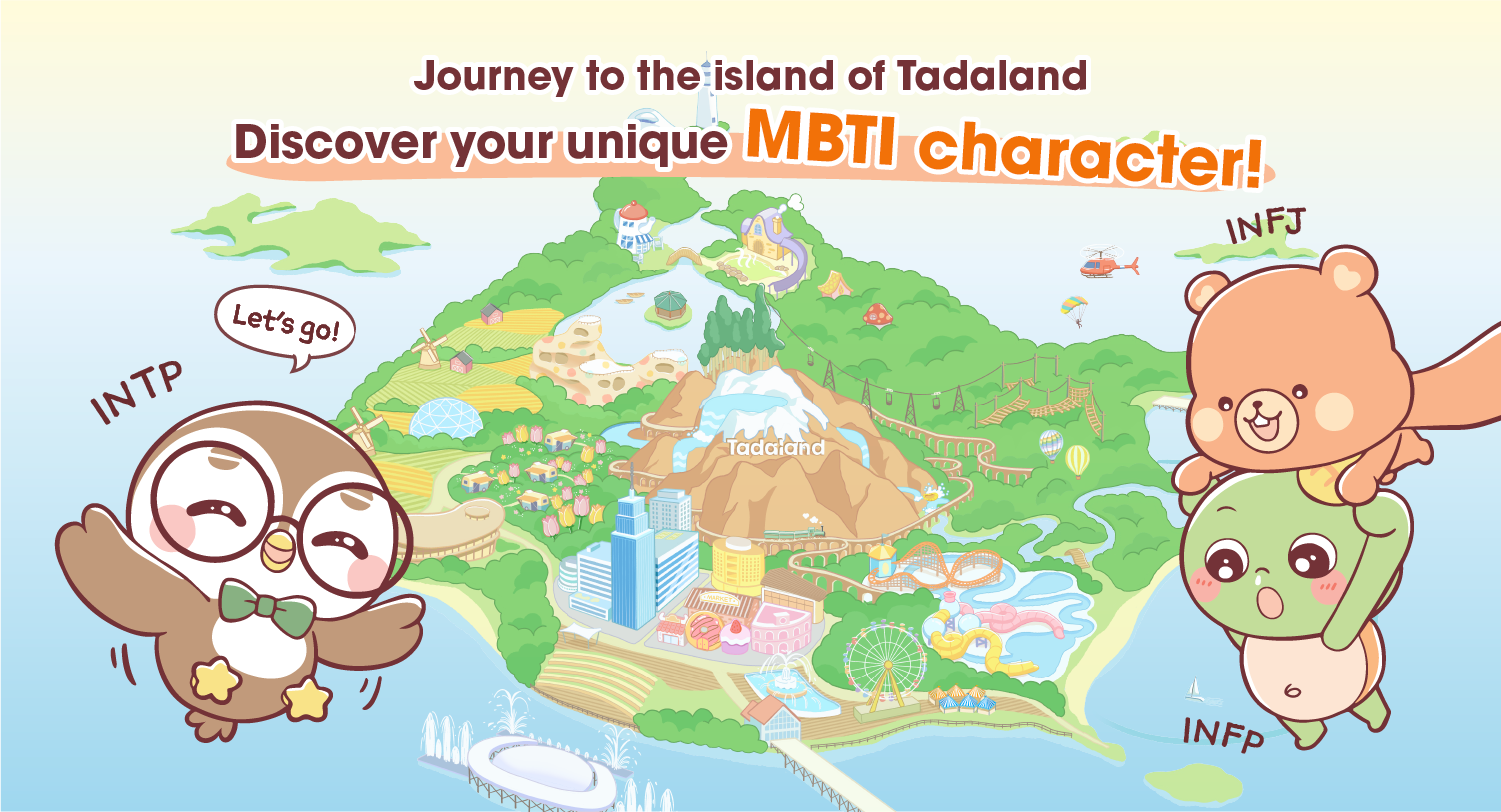
Not sure of your type yet? Take the FREE 16 Personalities - Tadaland MBTI Test! first. It takes about ten minutes, and the rest of this guide will make more sense with a result in hand.
Why most fans stop in week three
There are three walls, and they arrive in a predictable order.
The first wall is the end of the easy win. Hangul, the Korean alphabet, is famously learnable: 14 basic consonants and 10 basic vowels, built on a logic you can see in the shapes. Many learners can sound out words within a day or two, and that first week feels wonderful. Then the alphabet is done, and what follows is grammar: particles that attach to nouns, verb endings that change with politeness. Progress stops being visible overnight, and motivation that was fed by quick wins goes hungry.
The second wall is borrowed energy. Fandom is a brilliant reason to start, but it is someone else's energy. When a comeback ends or a drama finishes airing, the reason to open the textbook quietly fades. Learners who last are the ones who convert that borrowed energy into a habit of their own before it runs out.
The third wall is the gap between recognising and producing. After a month you understand far more than you can say. Hearing a phrase you know in an interview is thrilling; trying to build that same sentence yourself is humbling. Many people read the humbling part as failure. It is not. It is the normal shape of language learning, and every learner goes through it.
Which wall hits you hardest depends a good deal on type, and we will come to that. But first, some good news that applies to nearly everyone reading this in Hong Kong.
The Cantonese speaker's head start
A large share of Korean vocabulary, often put at more than half of dictionary entries, comes from Chinese. Linguists call it Sino-Korean. Because Cantonese kept many sounds that Mandarin lost, Cantonese speakers often hear these words and recognise them before they have studied them.
A few examples. 도서관 (doseogwan) is 圖書館. 준비 (junbi) is 準備. 주의 (juui) is 注意. 전화 (jeonhwa) is 電話. 시장 (sijang) is 市場. 가족 (gajok) is 家族. Say them aloud next to the Cantonese and the family resemblance is hard to miss.
The final consonants help too. Cantonese kept the clipped -p, -t and -k endings that Mandarin dropped, and Korean kept them as well, in its own way. 學 is hok in Cantonese and 학 (hak) in Korean. 十 is sap and 십 (sip). The -t ending usually became an -l in Korean, so 一 (jat) became 일 (il) and 月 (jyut) became 월 (wol). Once you know that one rule, a whole class of words opens up.
The practical lesson: when you meet a new Korean noun, ask what Chinese characters might be behind it. Many good Korean dictionaries show the hanja, the Chinese characters, next to Sino-Korean words. For a Hong Kong learner that turns memorising into recognising, which is faster and far more pleasant.
The words that will not transfer are the native Korean ones, including most everyday verbs and the grammar endings. That is where the work is, and where the differences between types really show.
The two letters that shape how you study
Of the four letter pairs, two matter most for language learning.
Sensing or intuition (S or N) shapes what you want first. Sensing types tend to want the concrete pieces in order: this particle, this ending, this example, then the next. Intuitive types tend to want the pattern first and the details later; they will happily watch an episode with Korean subtitles and guess, and they get bored by drills. Neither is wrong. But an S learner using an immersion-only method feels lost, and an N learner doing a strict workbook feels trapped.
Judging or perceiving (J or P) shapes how you keep going. Judging types do well with streaks, schedules and a fixed daily slot; they are thrown by missing a day. Perceiving types learn in bursts, following curiosity, and can do three hours on a Saturday and nothing on Tuesday; they are thrown by rigid plans. A J learner who never schedules drifts. A P learner forced into a daily streak eventually breaks it and gives up out of guilt.
Extraversion and introversion matter a little too, mostly for speaking practice: extraverts usually want a partner early, introverts usually want to rehearse alone first. The table below puts it all together, type by type. If you are also studying for exams at school, our guide to how each type revises for the DSE uses the same ideas.
Learning Korean, type by type
| Type | Where you tend to stall | The fix that suits you |
|---|---|---|
| ISTJ (Beanie) | Perfect notes, very little listening | Keep the workbook, but add 10 minutes of unscripted audio every day |
| ISFJ (Mozzarella) | Too shy to speak until it is "ready" | One patient partner and a fixed weekly chat about everyday things |
| INFJ (Roro) | Loves the culture, avoids the drills | Study lyrics or drama lines that mean something to you, line by line |
| INTJ (Jimi) | Designs the ideal system, delays using it | Set a measurable target, such as a TOPIK level, and start before the plan is perfect |
| ISTP (Nico) | Bored by rote memorising | Treat grammar as a mechanism: take sentences apart and rebuild them |
| ISFP (Mellow) | Drops the course when it feels dry | Learn through songs, food and places; write words on things you use |
| INFP (Apollo) | Waits for inspiration, then feels guilty | Keep a small Korean diary: three sentences about your day |
| INTP (Cappu-Cappu) | Reads about grammar instead of practising it | Follow the hanja trail, then force yourself to use each word in a sentence |
| ESTP (Hoola) | Speaks early, skips the basics | Keep talking, but spend 15 minutes a week fixing your three most common mistakes |
| ESFP (Taro) | Great at phrases, patchy on structure | Study with a friend and quiz each other before a concert or trip |
| ENFP (Jolly) | Starts five apps, finishes none | Choose one main resource and let everything else be a treat |
| ENTP (Pierre) | Argues with the textbook's explanations | Find a tutor or language partner who enjoys debating nuance |
| ESTJ (Cres) | Pushes too hard, burns out by month two | Plan rest days into the schedule and count them as progress |
| ESFJ (Pixi) | Studies for the group, not for yourself | Join a class, but set one personal goal the group does not share |
| ENFJ (Micah) | Helps everyone else and falls behind | Teach a friend Hangul: explaining it fixes it in your own head |
| ENTJ (Dante) | Impatient with the slow middle stage | Break the year into monthly milestones and track them like a project |
A four-week start that works for any type
Whatever your type, the first month decides most of what follows. This is a gentle plan built around the walls above.
Week 1: Hangul. Learn the letters and read everything you can find: album titles, drama posters, the menu at a Korean restaurant in Tsim Sha Tsui. Reading real things, badly, is better than reading a chart perfectly.
Week 2: fifty Sino-Korean words. Pick words with Chinese characters behind them and say each one next to its Cantonese reading. This is the week that builds confidence, because you will discover you already half-know more than you thought.
Week 3: one song, line by line. Choose a song you love and work through the lyrics slowly, with a dictionary. This is where the grammar wall usually hits, and meeting it inside something you care about makes it bearable. If you need a reminder of why you started, our piece on how each type stans may help.
Week 4: one scene without subtitles. Pick a short scene from a drama you already know well and watch it in Korean only, several times. You will catch more each time. Our K-drama MBTI guide has plenty to choose from.
After that, adjust using the table. The goal for the first month is not fluency. It is getting past week three with your textbook still on the desk.
Learning with your Tadamate

Every type in the table has a Tadamate beside it, and it is worth meeting yours. Jolly, the ENFP, is the one who downloads five apps on the first night; Beanie, the ISTJ, is the one with the colour-coded notebook. Neither is the better student. They just need different kinds of help to reach the same place.
If you do not know your type yet, take the free Tadaland MBTI test, then meet all sixteen Tadamates. And whatever your type turns out to be, remember why you started. Somewhere in a variety show, a word caught your ear and you wanted to understand the rest. That is still the best reason there is. 화이팅!