

Reply 1988 MBTI: The Full Ssangmundong Cast
Reply 1988 is a drama about five families sharing one alley in Ssangmundong, Seoul, and very little else happens in it. Nobody saves the world. A neighbour sends round a plate of side dishes, a teenager waits at a bus stop for longer than he admits, a mother counts the household money twice. That smallness is exactly why it works as a personality read: with no plot to hide behind, every character is defined by how they love the people in their own house.
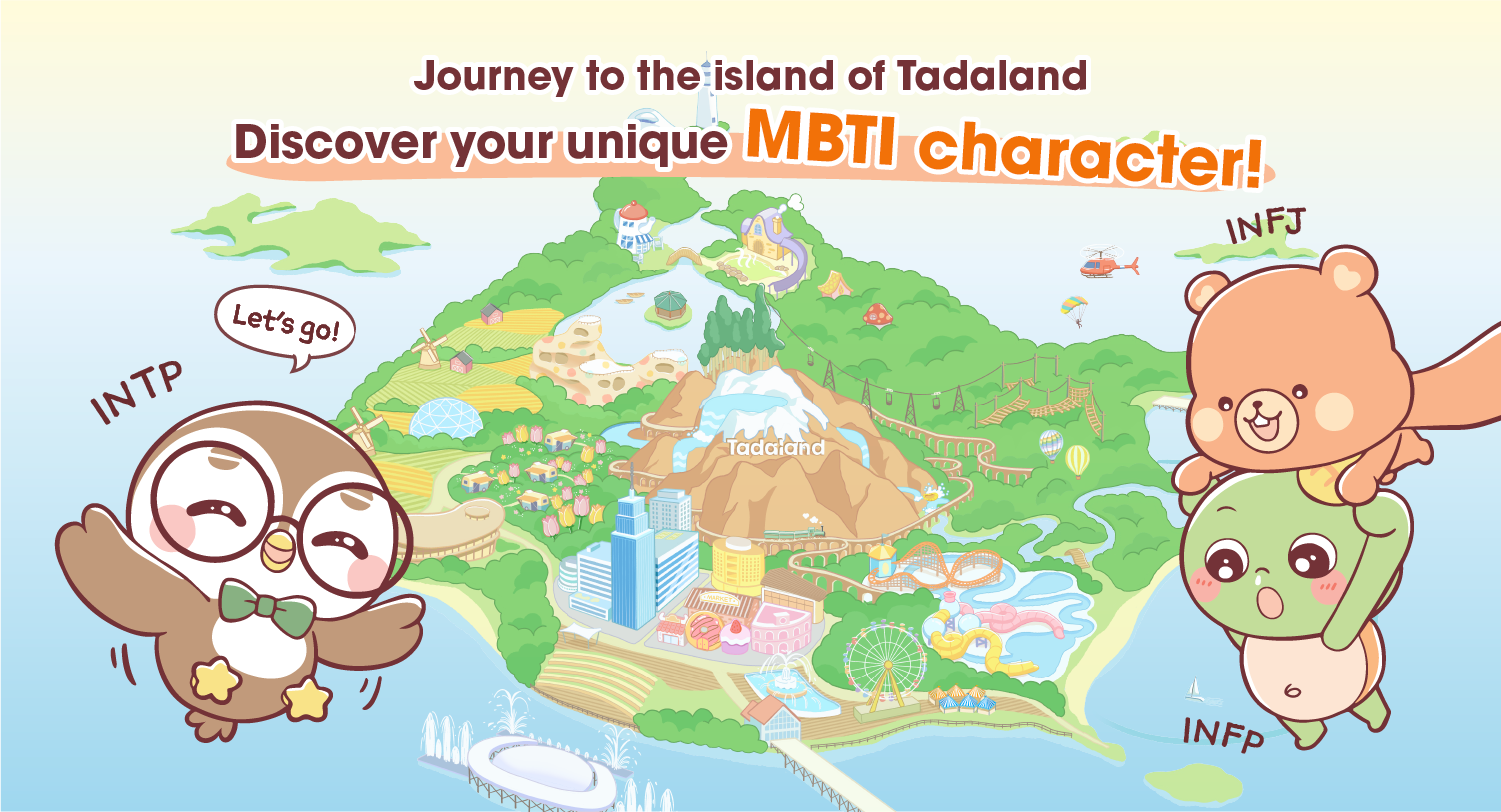
One thing before we start: everything below is our reading of fictional characters, not an official statement and not a claim about the actors who played them. If you want your own four letters rather than a guess, the FREE 16 Personalities - Tadaland MBTI Test! takes about ten minutes.
Spoiler note: the section on the husband discusses how the drama's central mystery is resolved. If you have not finished it, skip the heading that mentions him.
An alley is a better test than a plot
Most dramas show you a character under extraordinary pressure: a kidnapping, a merger, a war. Reply 1988 almost never does. Its pressures are the ordinary ones: a family that cannot quite pay its way, a sibling who gets more attention, a friend who likes the same girl. Those are the conditions under which type actually shows, because they repeat every day and nobody is performing for an audience.
The drama has a second advantage. It puts parents and children in the same frame for twenty long episodes, so you can watch habits move, or fail to move, from one generation to the next. That turns out to be the most interesting thing about it, and we will come back to it with the parents.
Deok-sun, the middle child who fills every room

Sung Deok-sun (our read: ESFP). Deok-sun is loud, near the bottom of her class, generous with her feelings and entirely present in whatever is happening in front of her. She dances badly and happily. She falls for people quickly and says so. The ESFP reading is not about the noise, though; it is about where her attention lives. She is always in the room she is in, rarely in a plan for next year.
What gives her depth is that the drama shows the cost of being that kind of person as a middle child. The well-known early storyline in which her birthday is folded into her older sister's is small and painful because Deok-sun is the one who never asks for anything, so nobody thinks to give it. ESFPs are often read as needing the spotlight. Deok-sun shows the quieter truth: they give the room its warmth, and they notice, more than they let on, when none comes back. In Tadaland the ESFP is Taro.
The two boys, and how the drama hides the husband
From the first episode the story cuts forward to an adult Deok-sun and her husband, and it keeps his identity hidden until the end. For most of the run the real contest is between two of the alley boys, and the writing is careful to make both answers plausible. The way it does that is by giving them two different ways of caring, which is where the types come in.

Kim Jung-hwan (our read: ISTJ). Jung-hwan is gruff, sparing with words, and shows affection almost exclusively through logistics. He turns up at the bus stop at night as if by coincidence. He moves a seat, carries a bag, fixes a problem, and denies that any of it meant anything. His choice of the air force academy is practical to the bone. The ISTJ pattern is visible in how he handles his feelings: he wants to be certain, he wants the right moment, and he treats a confession like a commitment that must be prepared properly before it is made. Beanie is the Tadamate here, and the likeness is in the quiet reliability.

Choi Taek (our read: ISFP). Taek is a professional Go prodigy who cannot manage the simplest parts of ordinary life, and his friends mother him for it. He is gentle, private, and absorbed in one craft. But the ISFP is not a passive type, and Taek proves it at the decisive moment: when he understands what he feels, he says it plainly to the people who need to hear it, with no strategy at all. ISFPs act from what feels true right now rather than from a prepared case. The Tadamate is Mellow.
So the reveal, when it comes, is less a twist than a verdict on timing. Jung-hwan waited to be sure; Taek spoke while he was still unsure. Viewers argued about it for years, and the argument is really about two types. Neither kind of love is lesser. One simply arrived first, and Jung-hwan's eventual confession, turned into a joke the moment it is spoken, is the ISTJ tragedy in a single scene: the words were ready, and the moment had already gone.
The rest of the Ssangmundong gang
Sung Sun-woo (our read: ISFJ). The model student and the eldest son of a widowed mother, Sun-woo became the man of his house young and never complained about it. He looks after his little sister, anticipates what his mother cannot handle, and is courteous to every adult in the alley. ISFJs carry responsibility without announcing it, and Sun-woo's private romance with Bo-ra is the one place he lets himself want something. Mozzarella is the ISFJ Tadamate.
Ryu Dong-ryong (our read: ENTP). Dong-ryong is the group's comedian and its self-appointed expert on everybody's love life, and he is often right. He treats romance like a theory to be tested and teases everyone about it. Underneath is a boy whose parents are almost never home, which is why his friends' houses matter so much to him. The ENTP's wit is frequently a way of staying close without having to ask. His Tadamate is Pierre.
Sung Bo-ra (our read: ESTJ). Deok-sun's older sister is a top university student, a campus activist and, at home, an intimidating enforcer of her own rules. She is harsh with her siblings and unbending about principles. The ESTJ reading explains both halves: she believes in structure, and she defends the people inside her structure fiercely, even when she will not say so. Cres is the ESTJ Tadamate.
The parents, where types do not follow the family tree
This is the part of the drama that repays a second viewing. The parents are not background; they are the same kinds of people as their children, thirty years further on.
| Parent | Our read | Why |
|---|---|---|
| Sung Dong-il | ESFP | Soft-hearted, sentimental and generous to a fault; the loan he guaranteed for a friend is why the family is poor. |
| Lee Il-hwa | ISTJ | Counts every won, keeps the household running, and hides her tenderness behind practicality. |
| Ra Mi-ran | ESFJ | Feeds the whole alley, knows everyone's troubles, and holds the neighbourhood together at her kitchen door. |
| Kim Sung-kyun | ISTP | Dry, awkward with his sons, and funnier than he means to be. |
| Kim Seon-young | ISFJ | Gentle, self-effacing, and quietly leaning on a son who learned early to be leaned on. |
| Choi Moo-sung | INFJ | A patient widower who notices other people's loneliness before his own. |
Look at the pairs. Deok-sun is plainly her father's daughter; Sun-woo is his mother's son. But Jung-hwan resembles neither of his parents. His closest match in the whole alley is Deok-sun's mother: the same brusque practicality, the same love expressed as a job done rather than a word said. Families pass on habits, jokes and wounds. They do not reliably pass on type, and the drama seems to know it.
That is worth holding on to if you are a parent yourself. A child who is nothing like you is not a failure of upbringing; it is simply a different person growing up in your house. We wrote more on that in MBTI for Hong Kong parents.
What the alley is quietly arguing
Put the five households side by side and the pattern is hard to miss. Nearly everyone in Ssangmundong loves in a dialect the others have to learn to read. Il-hwa's frugality is care. Jung-hwan's rudeness is care. Dong-ryong's jokes are care. Mi-ran's side dishes are care in its most literal form. The drama's warmth comes from characters slowly learning to translate one another.
That is close to what we mean when we say differences connect us. If you want more of it, the K-Drama MBTI index covers all sixteen types as drama leads, and there are full-cast reads of The Uncanny Counter S2 and Mask Girl as well.
And if you found yourself taking a side on the husband, it may be worth asking which of the two boys you are.