

Hospital Playlist MBTI: Why the Five Friends Last
Hospital Playlist is a drama about five doctors, but very little of it is about medicine. It is about a friendship that has survived more than twenty years: five people who met at medical school in 1999, ended up as senior specialists at the same hospital, and still eat lunch together and play in a band on weekends. Why does that group hold when most friendships from our twenties quietly dissolve? Personality type gives a surprisingly good answer. The five are not alike. They are five different ways of caring, and each one covers a gap the others leave open.
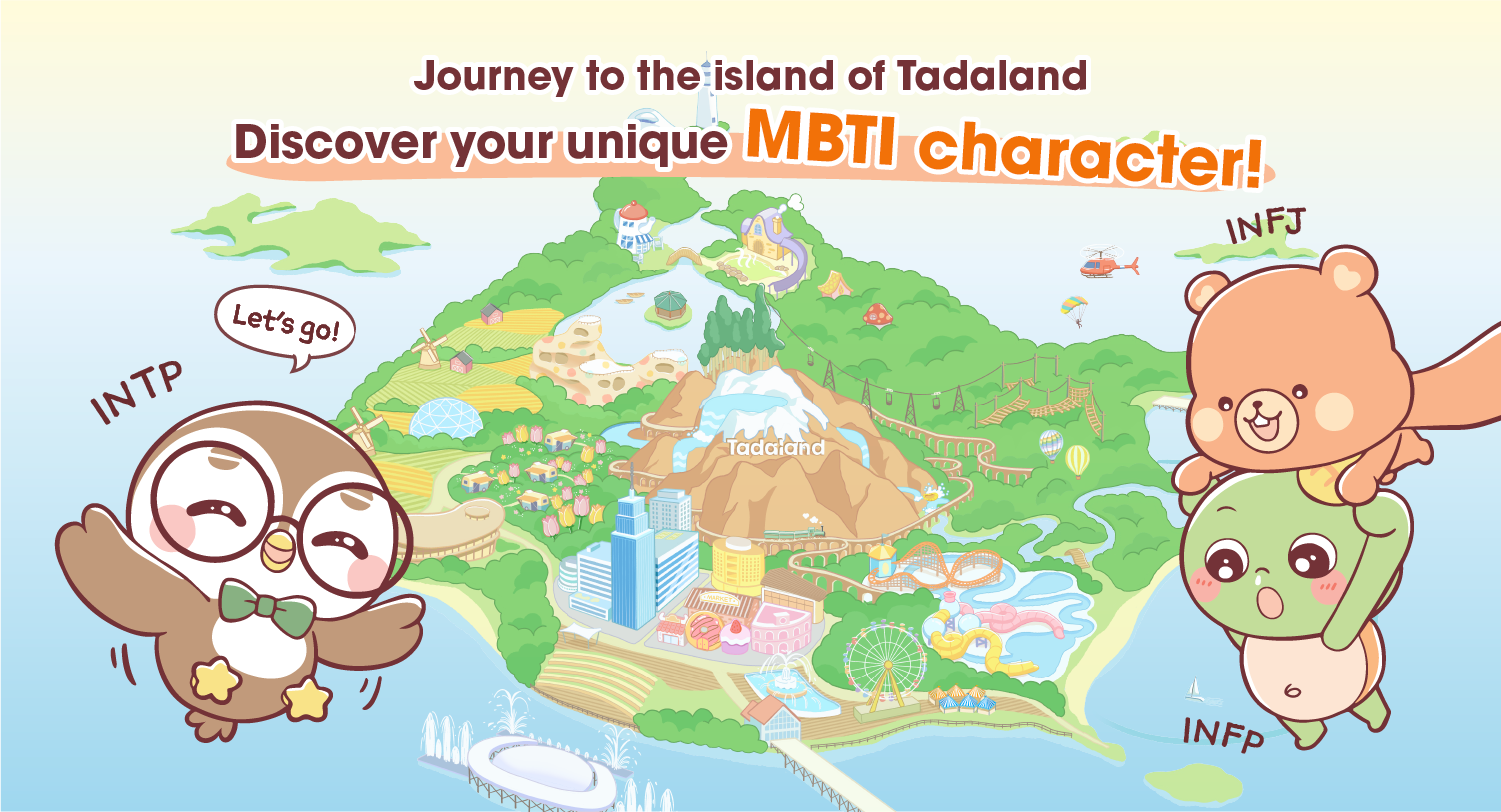
Before you decide which of the five you are, take the FREE 16 Personalities - Tadaland MBTI Test! It takes about ten minutes, and it is a better starting point than recognising yourself in a character.
A note on method: the types below are our reading of fictional characters, argued from what they do on screen. The show never states anyone's type, fan lists disagree, and we say where a second reading is reasonable. We are typing the characters, not the actors who play them.
Why this friendship lasts: the mechanism
Most adult friendships run on shared circumstance. You are friends with the people in your class, your office, your building. When the circumstance ends, the friendship thins, and nobody quite decides that it should.
The friendships that survive tend to have something extra: each person gets something from the group that they cannot easily get anywhere else. Not the same thing for everyone, but something. Hospital Playlist, made by the same writer-director team as Reply 1988, is built on exactly this idea. Watch closely and each of the five plays a different role for the others. One brings lightness. One brings conscience. One brings standards. One brings a place to be quiet. One holds the whole thing together.
Those roles map neatly onto type differences, and that is the useful lesson for a Hong Kong reader whose own group chat has gone quiet: a friendship group is not strongest when everyone is alike. It is strongest when everyone is needed.
Lee Ik-jun: our read, ENFP
Ik-jun is a liver transplant surgeon, the best in the building at his job and the least serious man in any room. He jokes through ward rounds, remembers everyone's name, and is raising his young son Woo-ju largely on his own. He is also the one who first pulled the five together and keeps pulling.
That combination of warmth, play and relentless connecting is the ENFP signature. What makes the reading convincing is the other side, the one the jokes cover: Ik-jun takes a patient's fear very seriously, and his humour is usually aimed at easing it. ENFPs are often mistaken for unserious people. Mostly they are serious people who have decided that heaviness helps nobody. In Tadaland the ENFP is Jolly.
What he gives the group: lightness, and the energy to keep meeting.
Ahn Jeong-won: our read, INFJ
Jeong-won is a paediatric surgeon from a wealthy family who, for much of the story, wants to leave medicine to become a Catholic priest. He quietly pays the hospital bills of families who cannot afford them. He is gentle, private and, when a child's safety is at stake, completely immovable.
That reads as INFJ: an inner sense of what a life should be for, pursued without fuss, joined to a sharp awareness of what other people are feeling. The priesthood question is the INFJ dilemma drawn large. Does meaning lie in the path you had imagined, or in the work already in front of you? An ENFJ reading is possible, since he is warm and good with people, but he recharges alone and keeps his biggest decisions to himself. In Tadaland the INFJ is Roro.
What he gives the group: conscience. When the others are unsure whether something is right, they look at Jeong-won.
Kim Jun-wan: our read, ESTJ
Jun-wan is a cardiothoracic surgeon with a reputation for being terrifying. He is blunt with residents, impatient with sloppiness and famous for his sharp tongue. He is also, as the series slowly reveals, deeply loyal, soft about the people he loves, and quietly devoted to Ik-jun's sister, Ik-sun.
His public face is textbook ESTJ: high standards, direct speech, a belief that things should be done properly and that saying so plainly is a kindness. The private face is what makes the reading worth defending. ESTJs are routinely misread as cold because their care arrives as correction. The resident Jun-wan shouts at is the resident he thinks is worth training. An ISTJ reading has support too, as he is not a natural socialiser, but he is quick, vocal and comfortable taking charge of a room. In Tadaland the ESTJ is Cres.
What he gives the group: standards, and the honesty nobody else wants to deliver.
Yang Seok-hyeong: our read, INFP
Seok-hyeong is an obstetrician. He is the quietest of the five: shy, awkward in company, living under the shadow of a formidable mother and carrying the weight of a failed marriage. With patients, though, he is extraordinarily patient and kind, and he notices distress that others walk past.
That reads as INFP: a strong, private sense of right and wrong, great sensitivity to other people's pain, and a strong preference for small, safe company over crowds. Seok-hyeong is what an INFP looks like when life has made them cautious. The friendship matters most to him precisely because it is the one place he never has to perform. In Tadaland the INFP is Apollo.
What he gives the group: a place to be quiet. Nobody has to be entertaining around Seok-hyeong.
Chae Song-hwa: our read, ISTJ
Song-hwa is a neurosurgeon, the only woman of the five and, by general agreement, the most capable of them. She is calm under pressure, fair with juniors, reliable to a fault, and the one the others call when things go wrong. When she needs to recover, she goes camping alone.
We read her as ISTJ: steady, practical, quietly principled, and far warmer than her composure suggests. Her strength is not charisma but trust. The others know that what Song-hwa says she will do, she does. An ESTJ or ISFJ reading is reasonable, but her need for solitude and her unshowy competence point to the ISTJ. In Tadaland the ISTJ is Beanie.
What she gives the group: the centre. The other four orbit her more than they realise.
| Character (our read) | Specialty | What they give the other four |
|---|---|---|
| Lee Ik-jun (ENFP) | Liver transplant surgery | Lightness and momentum |
| Ahn Jeong-won (INFJ) | Paediatric surgery | Conscience |
| Kim Jun-wan (ESTJ) | Cardiothoracic surgery | Standards and hard honesty |
| Yang Seok-hyeong (INFP) | Obstetrics and gynaecology | A place to be quiet |
| Chae Song-hwa (ISTJ) | Neurosurgery | The centre everyone trusts |
What your own group can take from it
Hong Kong friendships are under particular strain. People work long hours, families emigrate, flats are too small to host anyone, and a secondary school group that once met every week becomes a WhatsApp chat that only wakes up for birthdays. It is easy to conclude that the friendship has simply run its course.
Hospital Playlist suggests a different question: does everyone in the group still have a role? Groups often fade not because people stop liking each other, but because one person was quietly doing all the organising, and they got tired. Ik-jun keeps the five meeting, but he is not the only one carrying it. Each of the others gives something back that he needs.
So look at your own circle. Who brings the energy? Who holds the conscience? Who tells the truth? Who is the calm one people go to? If one person is doing all of it, that is the part to fix. Our piece on why you click with some people instantly looks at the first spark. This drama is about what keeps it going.
For more screen casts read the same way, see our K-Drama MBTI guide to all 16 types and the Crash Landing on You cast. To find your own place in a group like this one, take the free Tadaland MBTI test and meet all sixteen Tadamates.